Translate

Saturday, October 13, 2018

Comanche Fellowship

What could be more satisfying than a disparate group of friends who together share a spirited outlook to fly through the air and enjoy life as much as possible. This is the story of “Comanche-5”, a name first appended to a formation of five Piper Comanche airplanes and the associated fellowship of ten aviators who came together in 2011 for a 10-week flying safari through the Coral Sea group of South Pacific Islands. http://bazflyer.blogspot.com/2011/08/run-to-new-caledonia.html


Comanche-5’s formative journey began on Norfolk Island then meandered exploring the Southwestern Pacific countries of New Caledonia, Vanuatu, Solomon Islands and Papua New Guinea. Radio communications along the way required HF equipment that was not ubiquitous to all of the five Comanche airplanes. A work-around solution was for one of the aircraft to assume responsibility for all HF radio communications and thus the international call-sign “Comanche-5” was born. 


Since then members of the group have reconvened on a number of occasions for extended flying adventures even if this had to be “Comanche-3” or “Comanche-4”. What was the catalyst that initially brought the ageing aviators together and cemented such a strong fellowship? They all own and fly Piper Comanche airplanes.


Bazflyer in Outback Australia with Piper Comanche ZK-BAZ 


Comanche-4 (2018)


Following a unanimous decision ZK-BAZ remained at Jandakot Airport in favour of a road trip from Perth for a few days at Margret River.


Thursday, October 11, 2018

Jandakot

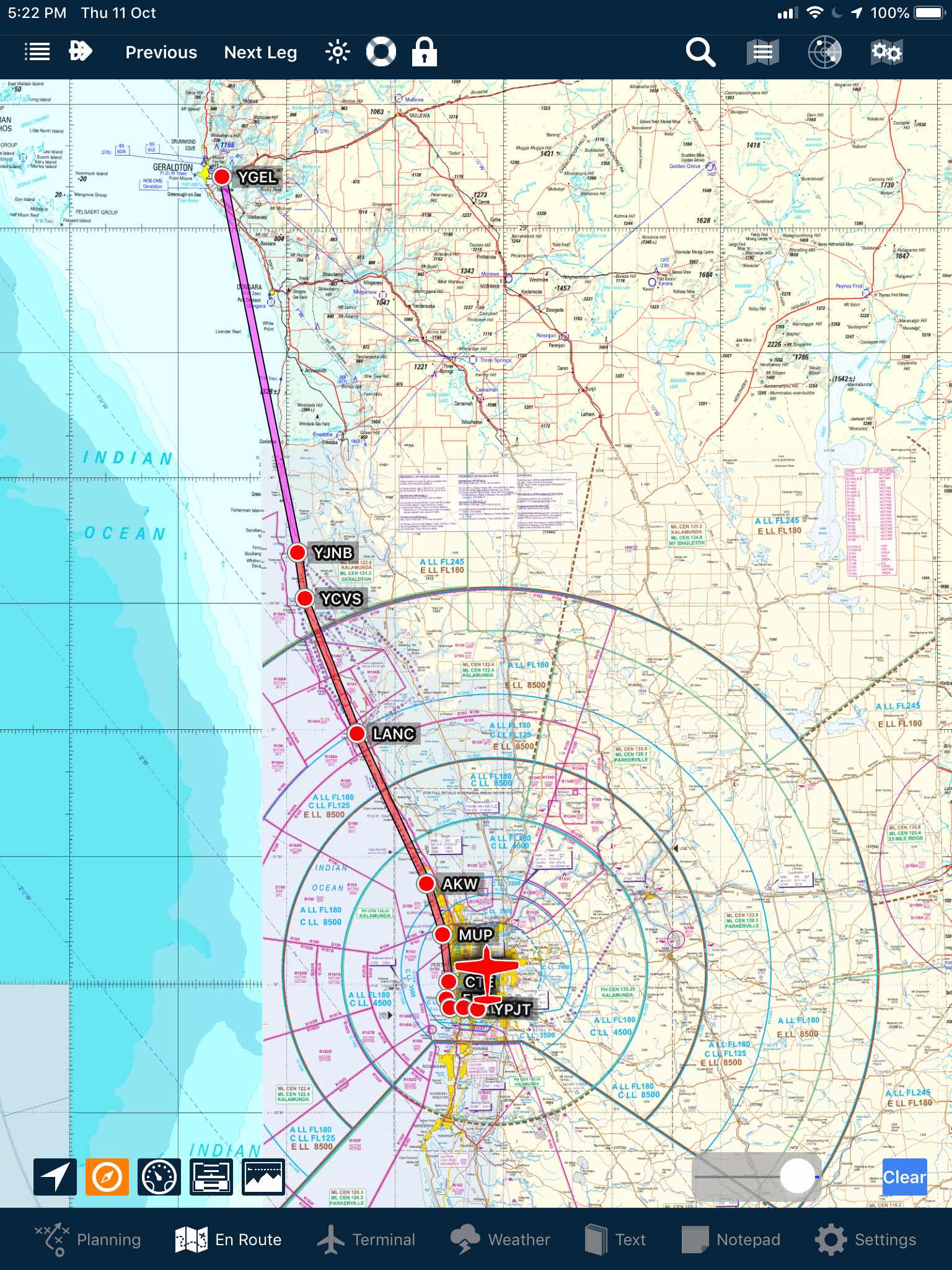
Without fanfare it too soon became the day for the Bazflyers to leave Geraldton and fly ZK-BAZ further south along the Australian West Coast for a few days in the West Australian State capital city of Perth. A check on the forecast weather along the way indicated possible thunderstorms and lightning around the Perth area in the afternoon. 

Flight route south into Jandakot Airport. Situated just 20 kilometres south of Perth’s International Airport. The General Aviation airport of Jandakot is the busiest airport in Australia for aircraft movements. 


As prudent flight planning would have it, the Bazflyers scheduled an early morning departure out of Geraldton so as to be safely on the ground at Perth’s Jandakot Airport well ahead of any forecast thunderstorms. Thunderstorms do not mix well with light aircraft flying. Add a bit of lightning to the mix and the resulting brew is definitely a cocktail to stay well clear of. Later in the afternoon, knowing BAZ was securely picketed on the aircraft parking area in front of the Royal Perth Aero Club, we smugly observed the awe and majesty of a thunderstorm and lightning display while seated on the balcony of our accommodation overlooking the Swan River.
Thunderstorms over Perth


Thunderstorm activity as shown on weather radar


Population of the City of Perth is a bit over 2 million. Lots of parks, cycle paths, great highways and so clean. Overall, a very impressive place.


Monday, October 8, 2018

Geraldton

Today’s flight from Kalbarri south to Geraldton saw the Bazflyers in the air for only about 45 minutes. The weather was pretty ordinary. A very brisk onshore wind and low broken cloud favoured following the coastline rather than enduring an uncomfortable ride over the land. Alighting on Geraldton’s 2km long runway occurred with a 25 knot headwind that made for a very short landing roll but then a long taxi to the designated turnoff and parking area.. 


Geraldton is the largest settlement visited by the Bazflyers since leaving the Gold Coast to fly west nearly 3-weeks ago. A city with a population of 40,000, Geraldton is reputedly in the midst of economic expansion. Land availability is good, housing prices are affordable and existing infrastructure is well established. A drive around the town quickly supported this. The local economy is underpinned by agriculture, mining, and oil and gas activity. All this as well as an idyllic seaside city that locals recognise as Geraldton.


On top of the highest ground overlooking the town is a poignant memorial to the crew of the HMAS Sydney http://bazflyer.blogspot.com/2018/10/carnarvon.html with a striking bronze statue of ‘The Waiting Woman’. She appears anxiously leaning into the wind, her gaze fixed patiently on the distant horizon, waiting for the sailors to come home. She perhaps unwittingly adds a touch of hope to this site of contemplation that honours and remembers the sacrifice of those who gave their lives for freedom.


Saturday, October 6, 2018

Kalbarri

It’s no surprise that the remote and windswept coastline of Kalbarri has been the setting of many shipwrecks over time. Perhaps the most famous of these was the Batavia, even although it is an episode in history that had until now escaped notice by the Bazflyers. The Batavia was on her maiden voyage sailing for the Dutch East India Company in 1629 when she struck Morning Reef, part of the Albrolhos Islands. The event has gone down in infamy thanks to the mutiny and massacre that took place among the survivors. https://www.huffingtonpost.com.au/2016/07/01/the-batavia-mutiny-and-massacre-of-1629-is-still-revealing-secre_a_21422401/


Armed with some previously unknown history the Bazflyers flew out of Kalbarri in BAZ for an aerial view of the Albrohos Islands and Morning Reef where the Batavia was wrecked.


Kalbarri is Head Quarters for the Kalbarri National Park. The park encompasses dramatic inland gorges with rock formations as old as 400 million years. Along the coastal edge the Park features magnificent coastal scenery and stunning cliffs. Then of course it holds a significant variety of wildlife and wildflowers. 


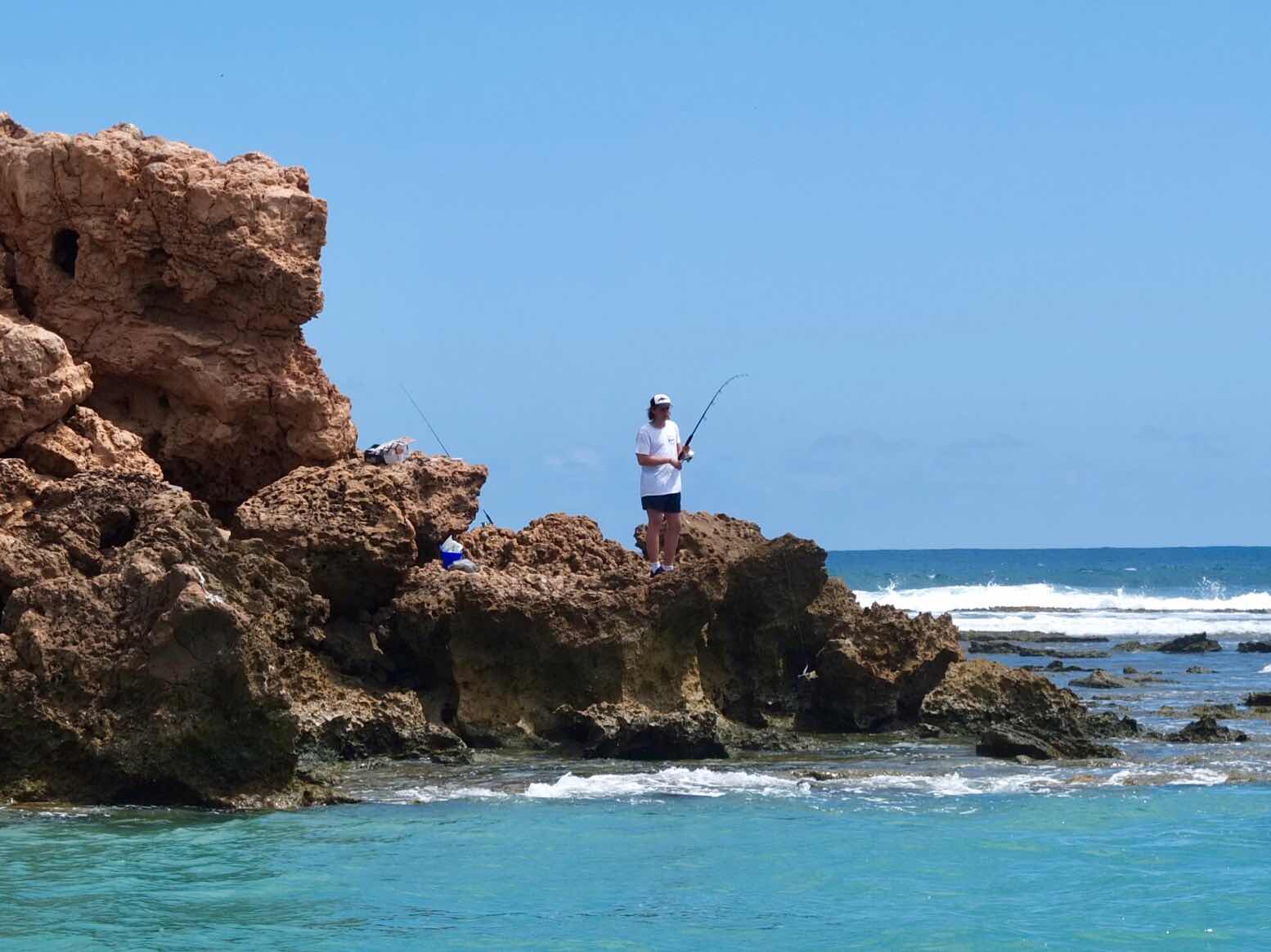
Kalbarri has the laid back relaxing aura of a beautiful family-friendly coastal location that property developers have yet to discover. We hope they never do....but if all else fails a great night can always be enjoyed at Findlay’s Fish Joint https://finlayskalbarri.com.au/ 


Wednesday, October 3, 2018

Wildflowers

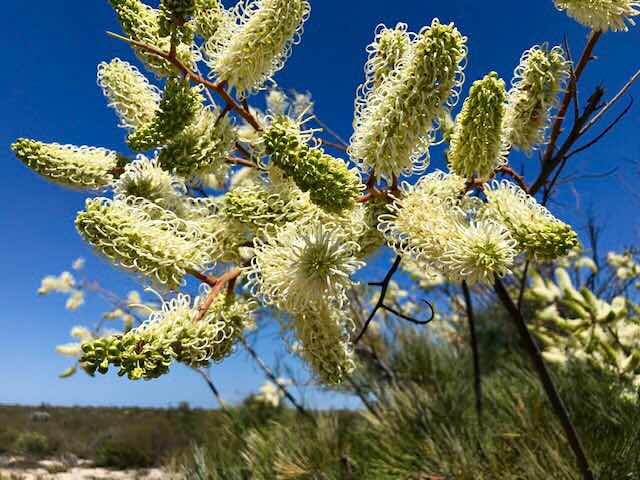
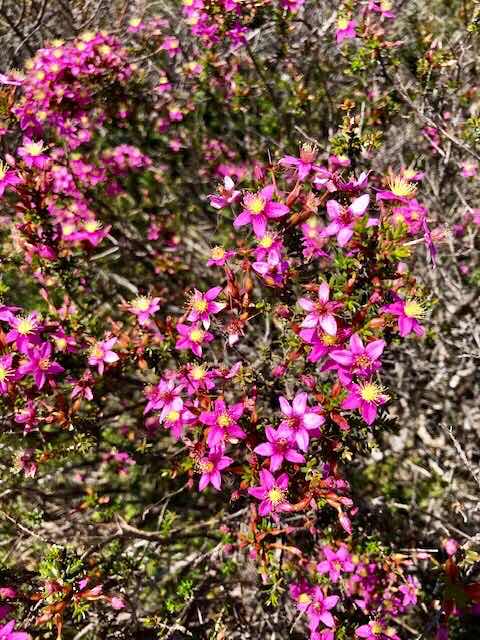
An enduring Bazflyer image of West Australia is not a black swan or the vivid red sand earth. It happens to be the region’s prolific expanse of wildflowers, the wonder of which was expansively on display upon landing at Kalbarri Airport.

Shark Bay flight to Kalbarri 


Kalbarri National Park encompasses the Murchison River mouth. The park includes some breathtaking coastal cliffs and at certain times of the year a dazzling display of wildflowers. How lucky were we to be visiting when the wildflowers were blooming.

West Australia reputedly has more wildflowers than anywhere else in the world. More than 12,000 species in fact with at least 60% of these found nowhere else. With BAZ secured for a few nights stay, a short amble around the airport terminal produced many examples....


Tuesday, October 2, 2018

Shark Bay

Just a short forty minute Comanche flight almost due south from Carnarvon and the Bazflyers were on finals to land at the small airport of Shark Bay. The nearby rather small settlement is known as Denham. On first appearances one could reasonably speculate what on earth could be interesting about this place. However, simmering literally just beneath the surface the locality is simply a bubbling cauldron of fascinating history. 


On the way to Shark Bay


Significantly, in the land of pubs, Denham is famously home to Australia’s most westerly hotel...


Cast eyes around the settlement you’ll find buildings constructed of Hamelin Conquina. This is a ‘shell-rock’ made of shell fragments that have become bound together. Local deposits of this rock also provide an important diary of ancient weather patterns.


Look out to the west of Denham and it’s possible to see Dirk Hartog Island, site of the first recorded landfall by a European on Australian soil. That was 1616. Since then the area has seen a succession of European landings by Dutch, French and British that reveal much about the shifting interests and rivalries between nations over their stake in the southern land of Australia.


What lives in here? The red sand so strikingly a feature of Australia’s western shores is actually sand particles coated with iron oxide.


Comanches being prepared for flight


Monday, October 1, 2018

Carnarvon

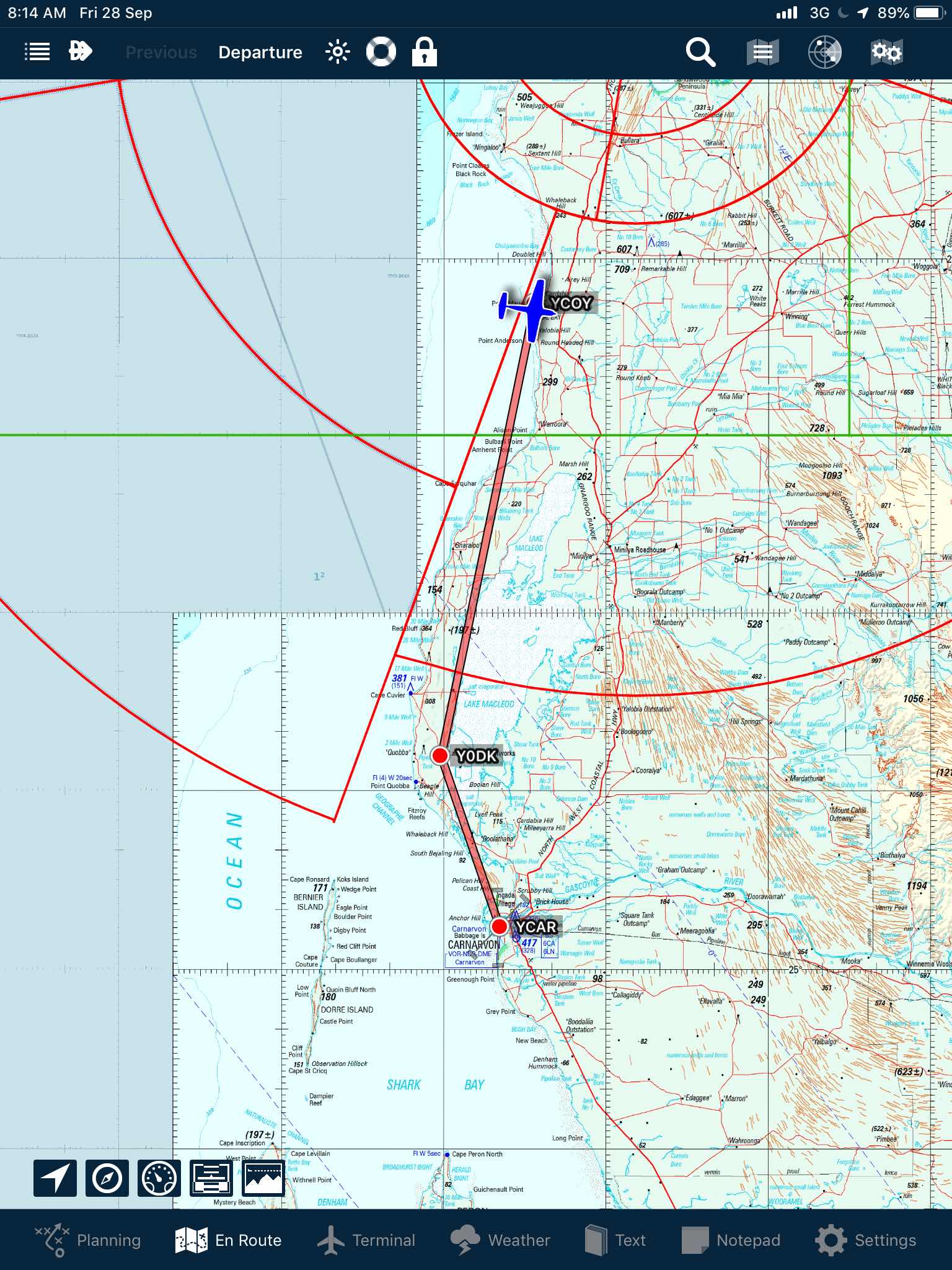
Distance hopping in Australia with a Piper Comanche must be close to freedom travel at its best. Stow your overnight bag in the airplane, takeoff and like an Apollo moonshot enjoy the ride until figuratively splashing down at the next stopping-off place. From Coral Bay it was just a short 40 minute orbital hop south, tracking the red-sandy shoreline that characterisers Australia’s western extremity, before it was time to prepare for landing at the small coastal settlement of Carnarvon. 


It’s been a Bazflyer experience that inevitably the unexpected can usually be anticipated on a typical visit to any small Australian rural settlement. Carnarvon did not disappoint. The surrounding area is intensively cultivated. Known as the fruit bowl of Western Australia, the town of Carnarvon produces 80% of WA's total fruit and vegetable crops. It is also home to a thriving prawn, scallop, crab and fishing industry. But dig a little deeper and it has a surprising history.


At the outbreak of WW2 the warship H.M.A.S. Sydney was a military icon of its time. Victorious in battle the Cruiser class ship returned to duties off the Australian Coast in the early 1940’s. It was while engaged on a mission off Australia’s West Coast in November 1941 that the ‘Sydney’ was sunk by the German Raider Kormoran, disguised as a merchant ship, with the loss of its total compliment of 645 crew. No bodies were ever recovered. This engagement and wartime tragedy occurred in the waters about 200km off Carnarvon. Most of the Kormoran’s German crew made it ashore or were rescued. It was not until March 2008 and using the most modern technology then available that the resting place of both ships was found. A wonderful memorial to this not so well known navel episode of WW2 stands proudly in the settlement of Carnarvon. 


The richness of Carnarvon’s history extends into the modern area where in the 60’s this small community played a key role in the USA space program and putting man on the moon. The Carnarvon Tracking Station was built to support NASA’s Gemini, Apollo and Skylab programs. It was the last station to communicate with the space capsules leaving the earth orbit, and the last to make contact before splashdown in the Pacific Ocean. The facility closed in 1973 and at the height of the operation it had a staff of 220 people. Bazflyers visited the museum that now occupies the site and recalled our own young memories of men walking on the moon. 


Coral Bay south to Carnarvon


Memorial to the crew of 645 men lost on the H.M.A.S. ‘Sydney’


Flowers growing in the red West Coast sand


Inside the Space and Technology Museum 


Art depicting the local fishing industry