Translate

Saturday, October 6, 2018

Kalbarri

It’s no surprise that the remote and windswept coastline of Kalbarri has been the setting of many shipwrecks over time. Perhaps the most famous of these was the Batavia, even although it is an episode in history that had until now escaped notice by the Bazflyers. The Batavia was on her maiden voyage sailing for the Dutch East India Company in 1629 when she struck Morning Reef, part of the Albrolhos Islands. The event has gone down in infamy thanks to the mutiny and massacre that took place among the survivors. https://www.huffingtonpost.com.au/2016/07/01/the-batavia-mutiny-and-massacre-of-1629-is-still-revealing-secre_a_21422401/


Armed with some previously unknown history the Bazflyers flew out of Kalbarri in BAZ for an aerial view of the Albrohos Islands and Morning Reef where the Batavia was wrecked.


Kalbarri is Head Quarters for the Kalbarri National Park. The park encompasses dramatic inland gorges with rock formations as old as 400 million years. Along the coastal edge the Park features magnificent coastal scenery and stunning cliffs. Then of course it holds a significant variety of wildlife and wildflowers. 


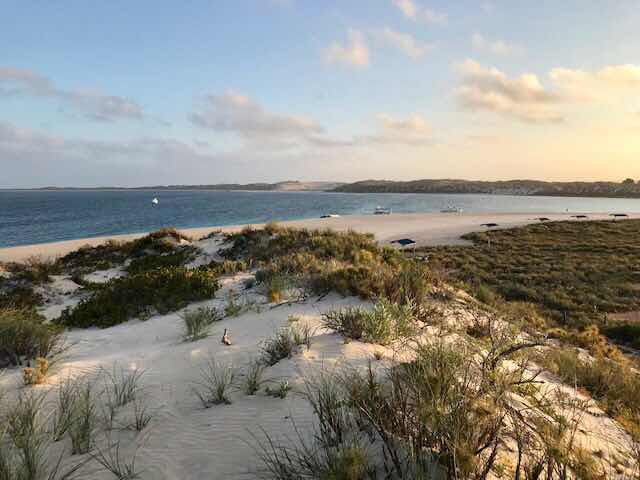
Kalbarri has the laid back relaxing aura of a beautiful family-friendly coastal location that property developers have yet to discover. We hope they never do....but if all else fails a great night can always be enjoyed at Findlay’s Fish Joint https://finlayskalbarri.com.au/ 


Wednesday, October 3, 2018

Wildflowers

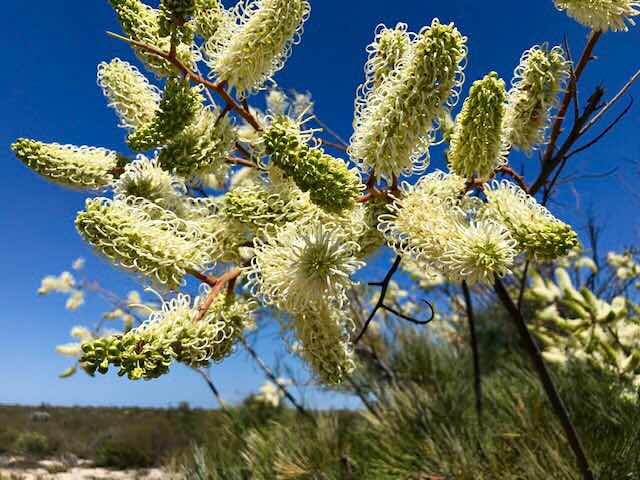
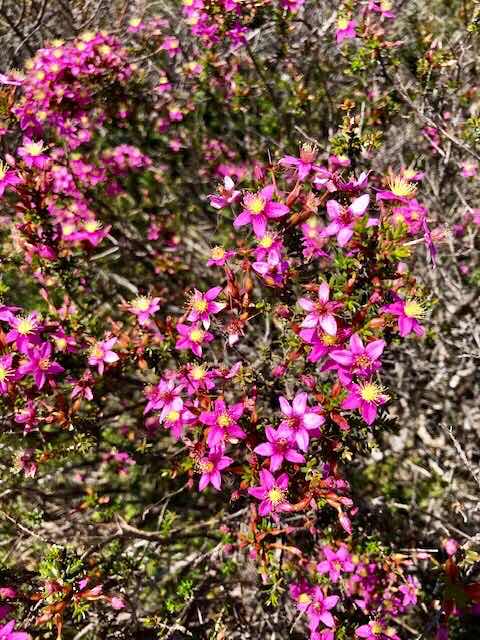
An enduring Bazflyer image of West Australia is not a black swan or the vivid red sand earth. It happens to be the region’s prolific expanse of wildflowers, the wonder of which was expansively on display upon landing at Kalbarri Airport.

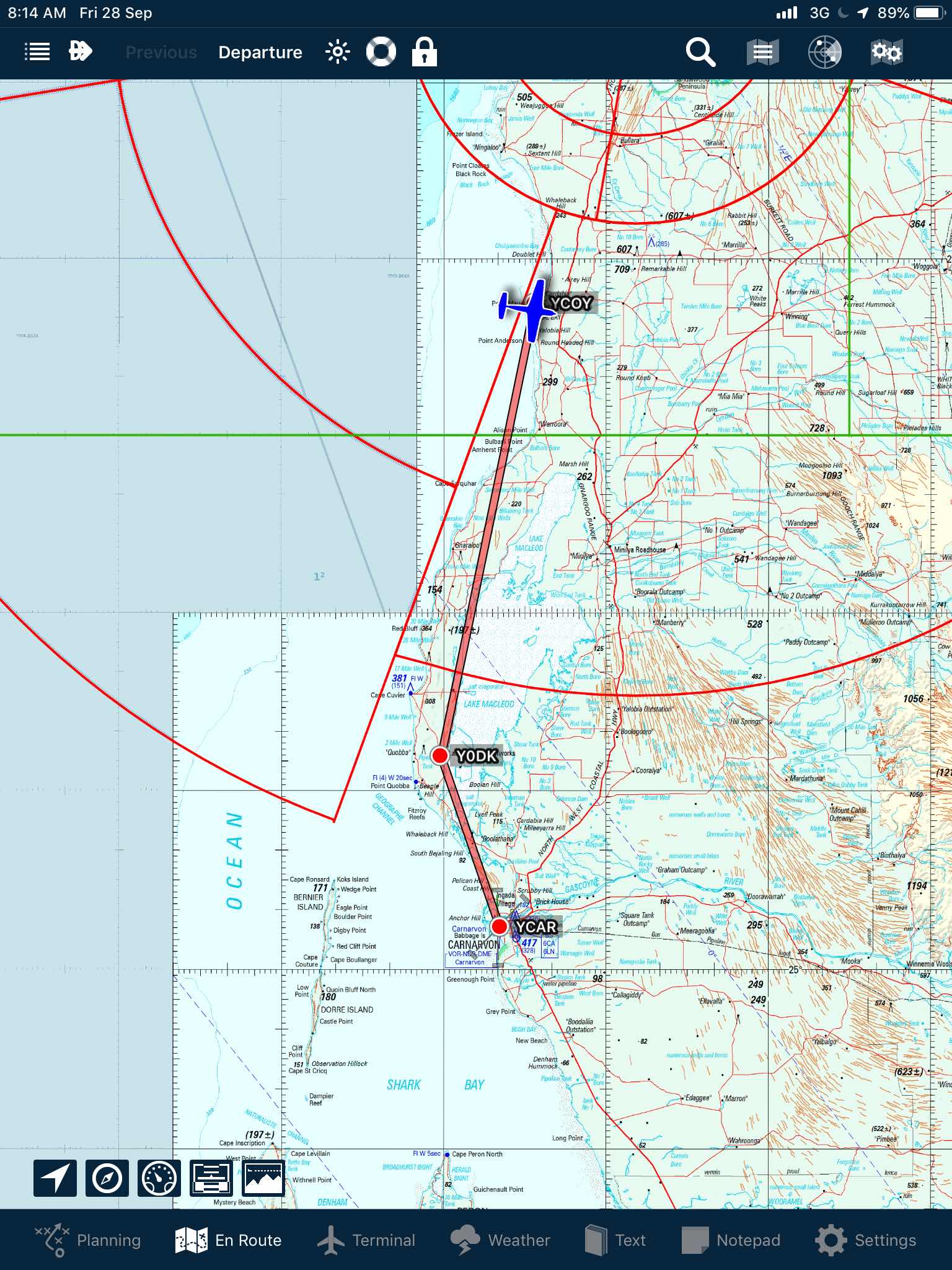
Shark Bay flight to Kalbarri 


Kalbarri National Park encompasses the Murchison River mouth. The park includes some breathtaking coastal cliffs and at certain times of the year a dazzling display of wildflowers. How lucky were we to be visiting when the wildflowers were blooming.

West Australia reputedly has more wildflowers than anywhere else in the world. More than 12,000 species in fact with at least 60% of these found nowhere else. With BAZ secured for a few nights stay, a short amble around the airport terminal produced many examples....


Tuesday, October 2, 2018

Shark Bay

Just a short forty minute Comanche flight almost due south from Carnarvon and the Bazflyers were on finals to land at the small airport of Shark Bay. The nearby rather small settlement is known as Denham. On first appearances one could reasonably speculate what on earth could be interesting about this place. However, simmering literally just beneath the surface the locality is simply a bubbling cauldron of fascinating history. 


On the way to Shark Bay


Significantly, in the land of pubs, Denham is famously home to Australia’s most westerly hotel...


Cast eyes around the settlement you’ll find buildings constructed of Hamelin Conquina. This is a ‘shell-rock’ made of shell fragments that have become bound together. Local deposits of this rock also provide an important diary of ancient weather patterns.


Look out to the west of Denham and it’s possible to see Dirk Hartog Island, site of the first recorded landfall by a European on Australian soil. That was 1616. Since then the area has seen a succession of European landings by Dutch, French and British that reveal much about the shifting interests and rivalries between nations over their stake in the southern land of Australia.


What lives in here? The red sand so strikingly a feature of Australia’s western shores is actually sand particles coated with iron oxide.


Comanches being prepared for flight


Monday, October 1, 2018

Carnarvon

Distance hopping in Australia with a Piper Comanche must be close to freedom travel at its best. Stow your overnight bag in the airplane, takeoff and like an Apollo moonshot enjoy the ride until figuratively splashing down at the next stopping-off place. From Coral Bay it was just a short 40 minute orbital hop south, tracking the red-sandy shoreline that characterisers Australia’s western extremity, before it was time to prepare for landing at the small coastal settlement of Carnarvon. 


It’s been a Bazflyer experience that inevitably the unexpected can usually be anticipated on a typical visit to any small Australian rural settlement. Carnarvon did not disappoint. The surrounding area is intensively cultivated. Known as the fruit bowl of Western Australia, the town of Carnarvon produces 80% of WA's total fruit and vegetable crops. It is also home to a thriving prawn, scallop, crab and fishing industry. But dig a little deeper and it has a surprising history.


At the outbreak of WW2 the warship H.M.A.S. Sydney was a military icon of its time. Victorious in battle the Cruiser class ship returned to duties off the Australian Coast in the early 1940’s. It was while engaged on a mission off Australia’s West Coast in November 1941 that the ‘Sydney’ was sunk by the German Raider Kormoran, disguised as a merchant ship, with the loss of its total compliment of 645 crew. No bodies were ever recovered. This engagement and wartime tragedy occurred in the waters about 200km off Carnarvon. Most of the Kormoran’s German crew made it ashore or were rescued. It was not until March 2008 and using the most modern technology then available that the resting place of both ships was found. A wonderful memorial to this not so well known navel episode of WW2 stands proudly in the settlement of Carnarvon. 


The richness of Carnarvon’s history extends into the modern area where in the 60’s this small community played a key role in the USA space program and putting man on the moon. The Carnarvon Tracking Station was built to support NASA’s Gemini, Apollo and Skylab programs. It was the last station to communicate with the space capsules leaving the earth orbit, and the last to make contact before splashdown in the Pacific Ocean. The facility closed in 1973 and at the height of the operation it had a staff of 220 people. Bazflyers visited the museum that now occupies the site and recalled our own young memories of men walking on the moon. 


Coral Bay south to Carnarvon


Memorial to the crew of 645 men lost on the H.M.A.S. ‘Sydney’


Flowers growing in the red West Coast sand


Inside the Space and Technology Museum 


Art depicting the local fishing industry 


Friday, September 28, 2018

Coral Bay

East coast to West coast, Coolangatta to Coral Bay or however one chooses to call it, from one side of Australia to the other is a journey of some 4000kms. It represents approximately 10% of the total distance around the world and is at least fifteen hours flight time in the Bazflyer’s Comanche airplane.


The flight from Newman to Coral Bay occurred practically along the Tropic of Capricorn, the southernmost latitude where the Sun can be directly overhead. When the landing wheels alighted on the dirt Coral Bay airstrip it was the furtherest place West that ZK-BAZ had ever flown.


Coral Bay is a small settlement that lies protected from the Indian ocean by the Ningaloo Reef which is Australia's only fringing reef. This is where in contrast to other reefs the coral starts right at the water's edge. As a result the abundant habitat of fish and coral are very accessible. It’s also a place where one can to swim among giant Manta Rays....a prime reason for the Bazflyers visit. As a bonus we got to experience from close-quarters, a number of migratory Humpback whales with young calves that were making their way back to southern waters. https://youtu.be/0Um10GqmGpg


Flight route from Newman to Coral Bay on the West Coast of Australia. The northerly diversion from Newman was to look at Hickman Crater.  https://www.australiangeographic.com.au/topics/science-environment/2015/06/hickman-crater-in-western-australia/


Landing Coral Bay


The beach at Coral Bay


Newman

In so many ways almost everything about the great Australian Outback is big. The landscape is big with an endless horizon. The distances to just about anywhere are big. Stand in the middle of the Australian Outback and it is thousands of kilometres to the ocean in every direction. Even for the Bazflyers travelling at 300 km/hr in a Piper Comanche airplane, going from one place to the next can require hours of flying in a straight line.  


After taking off at Ayres Rock Airport where early morning temperatures were already well into the 30’s, (that’s Centigrade) and levelled off heading West at a slightly cooler flight altitude, the next place ahead of any consequence was four hours away. It was Newman. 


Now being in the great Australian Outback there just had to be something big about Newman. Yes, it’s Mount Whaleback mine, the largest single open-cut Iron Ore Mine in the World. It sure is an impressive big hole in the ground, currently 5.5km long and 2km wide. The ore mined at Mt Whaleback is transported 426km by rail from Newman to Port Headland on the West Coast. Not unsurprisingly, this is also big. It is the longest privately owned railroad in the Southern Hemisphere. The average train is nearly 3km in length, consisting of 4 locomotives, 268 Ore cars and 1 driver. Reputedly a train driver on the Newman to Port Headland line enjoys pampered working conditions and is paid $280,000 a year. Even that is big.


Four hour flight to Newman


Finals to land at Newman


Mt Whaleback Iron Ore open-cut mine


Even wheels are big


Tuesday, September 25, 2018

The Rock

It’s an ancient red sandstone monolith visible on the horizon many miles before its physical presence becomes truly apparent. Flying ever closer this dominating geological feature raises like a sphinx in a stark landscape. This is Uluru. 


Uluru has been an integral part of Aboriginal folklore for tens of thousands of years. One story says that none of the places we know existed until creator beings, in the forms of people, plants and animals, traveled widely across the land. Then, in a process of creation and destruction, they formed the landscape as we know it today. However, in the Bazflyers opinion and legend aside, this iconic feature is a mighty impressive ‘Rock’.


The flight time from Whyalla to Ayers Rock (Uluru) was 4.5 hours with an intermediary fuel stop at the opal mining settlement of Coober Pedy. Flight conditions in otherwise clear air were uncomfortable for most of the journey due thermal turbulence that could not be avoided even with a change in altitude. Flying the outback can sometimes be like that. The agitated air even challenged our scenic flight around ‘The Rock’ and adjacent Olgas also known as the Kata Tjua.


Flight Path to Uluru


The Rock


Olga’s


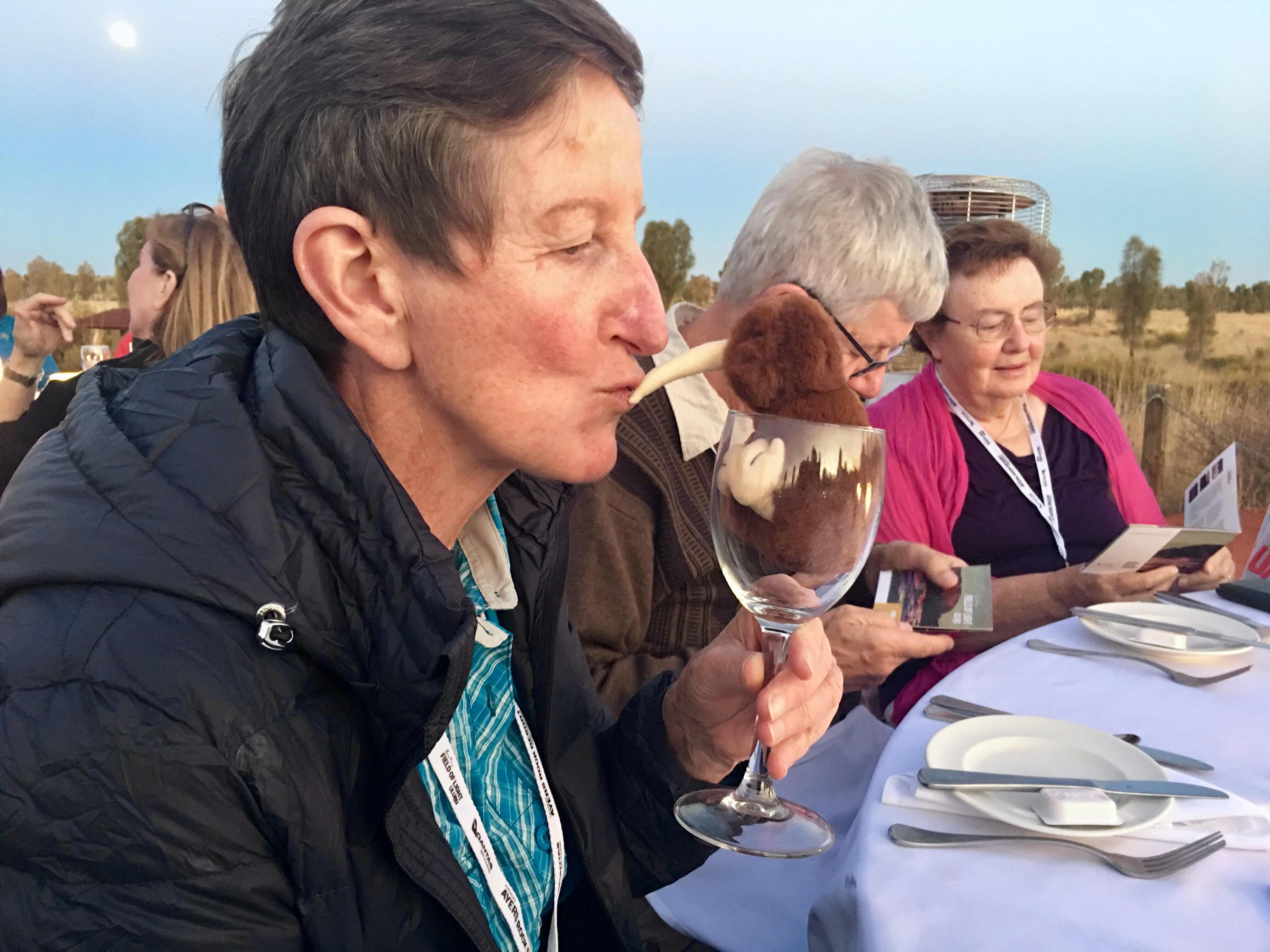
Dinner in the dessert 


Fields of Light