Translate

Friday, April 7, 2023

Taupō Airport

Airports exist all over the world. More than 40,000 of them in all manner of places. Some are huge and others are small. Together they cater for approximately 100,000 aircraft flights every day.


The busiest airport in the world is Atlanta International, except for just one week in July each year when that statistic belongs to Oshkosh Airport in Wisconsin. The annual EAA Oshkosh Airshow is a magnet for more than 10,000 aircraft.


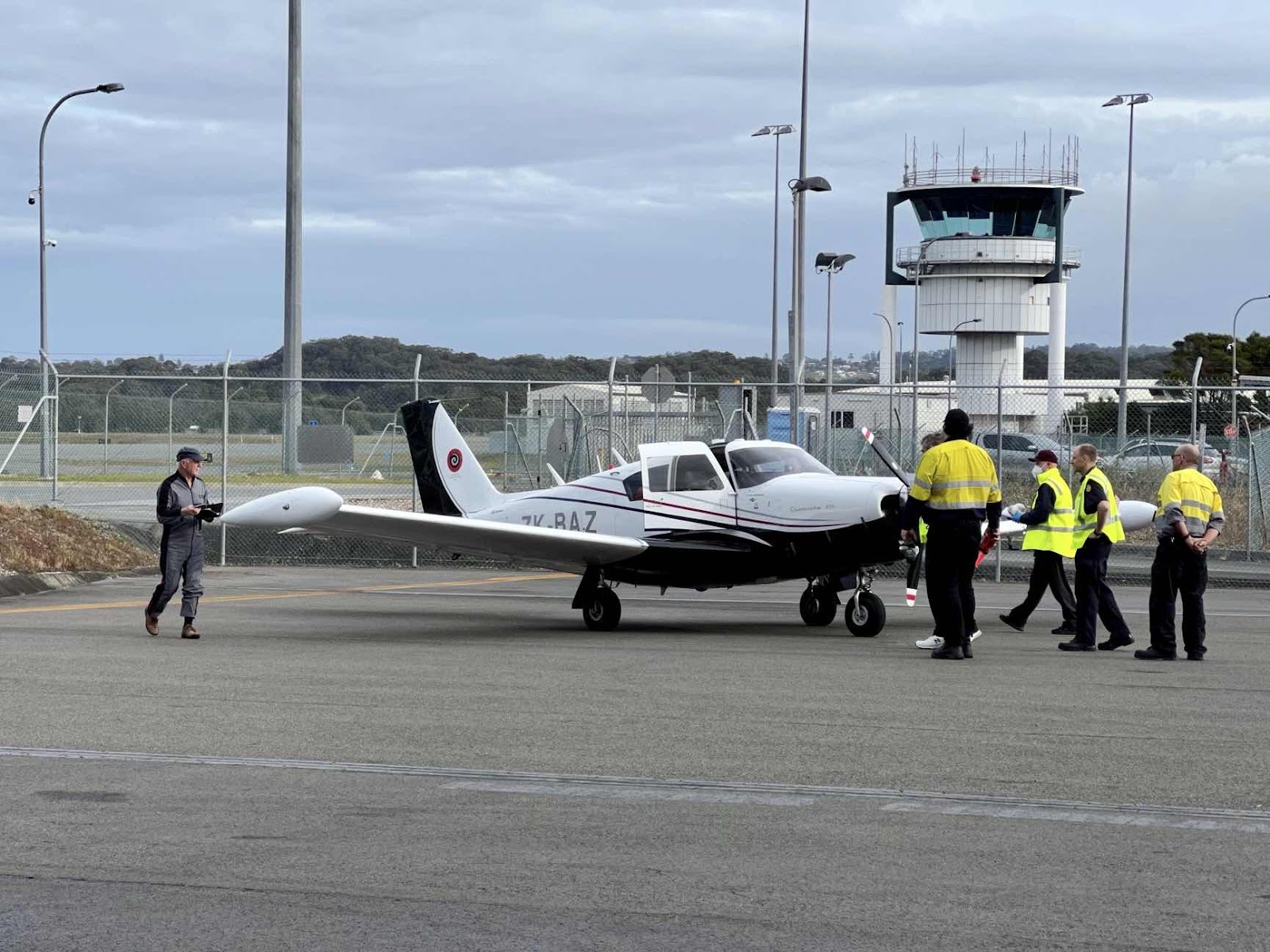
In the world of airports, whether big or small, it is hardly an every day occurrence for the airport’s principal passenger terminal to close with the departure of a flight, then reopen in a new building located next door for the arrival of the next flight. This phenomena recently occurred on Taupo Airport…home base for the Bazflyers.


Change, of course, is a constantly occurring theme but transiting is often said to be the art of change. It is the important element making a successful connection from the old to the new and in this regard it can be fairly stated that moving from the old Taupō Airport Terminal to the new one was an “artful transition”. 


Taupō Airport might not be a record setter in any sense of the meaning, its definitely not a big airport, but its new airport terminal is certainly an individual statement in art. Not only is the building an architectural design reflecting Taupo’s volcanic environment, but a huge unique sculpture by famous New Zealand potter, Barry Brickell, adorns an interior wall. Saved from the scrap yard by a local businessman, Brickell’s A Study in Volcanology is one of 11 large pottery works he produced in his lifetime.


“A Study in Volcanology” terracotta mural by Barry Brickell


Commissioned by the Taupō Post Office in 1985, the imposing Brickell work stands 3.6 metres tall. It was split into two panels that sat either side of the building’s entrance. Subsequently, when the Post Office closed the panels were removed and reinstalled in a carpark where they languished until in 2014 the owner of the carpark advised it was going to be demolished.


Local businessman, Chris Johnston, has a deep interest in the arts and was aware of the significance of the Brickell artwork. It features 54 handcrafted terracotta tiles which collectively create a depiction of Lake Taupō, its surrounds and what lies beneath. It was based on Brickell’s own theory of volcanology.


Johnston arranged for the developer to let him know when demolition was planned so the artwork could be saved. Then, about a year later, Johnston got a call to say bulldozers were on the site and work was about to get underway. As it turned out the site owner had instructed the demolition contractor to take Brickell’s artwork to the landfill along with other waste from the demolition site.


Negotiation ensued. Johnston paid $4000 removal costs to become the owner of a work of art potentially worth hundreds of thousands of dollars. However, the tiles that made up the artwork stored in one of the businessman’s buildings, were stuck fast to large concrete panels and needed significant work to remove and repair.


Brickell died in 2016 at the age of 80. A few years later, Johnston arranged for conservation experts to remove the 54 terracotta tiles from the heavy concrete slabs they had been glued to. It was a complicated project, with a number of the tiles breaking and needing to be repaired.


The completed restoration now occupies a prominent place in the new Taupō Airport Terminal, where it can be viewed as one piece like it was always meant to be.


Final flight from the old Terminal


First flight at the new Terminal


Artful transition from the old Terminal to operations at Te Taunga Waka Rererangi o Taupō


Friday, December 16, 2022

Silver Aviators

Phantom Eagle and Captain America, both famous comic book superheroes, fertilised the imaginations of many young boys, and no doubt a few girls, growing up in the 1950’s. The Silver Aviator may not be comparable to the comic book superhero, but is nevertheless uniquely a product of those times…a baby-boomer still ‘waggling wings’. 


Silver Aviators, lived youth in an era of post-war optimism. Those exciting and innovating days of the 1950’s and 1960’s when aircraft manufacturers were churning out shiny new models at a prolific rate and birthing entire new categories of aeroplanes. Silver Aviators have each occupied a formative step on the ladder of aviation history when the idolised backdrop of wartime air aces merged with dreams of flying freedom. The dream of; “I am going to be a pilot”….has metaphorically fire-walled many throttles on the way to a life-long aviation love affair.


Age data on aircraft pilot’s is relatively easy to obtain. For example, U.S. statistics list the average age for all US pilots at approximately 45 years. Then, to cap that off there are over 1,600 pilots around the world who count themselves as members of one of the the world's most distinguished pilot organisations, the United Flying Octogenarians. Each of its members having flown as pilot in command after reaching their 80th birthday.


Silver Aviator’s are undoubtedly septuagenarians. Baby boomers outwardly exhibiting the ravages of their age but when it comes to flying an airplane they are inwardly many years younger. They are a unique genre of pilots drenched in the spirit of the noblest of superheroes, while harbouring an irresistible passion to fly an airplane and ‘waggle wings’.


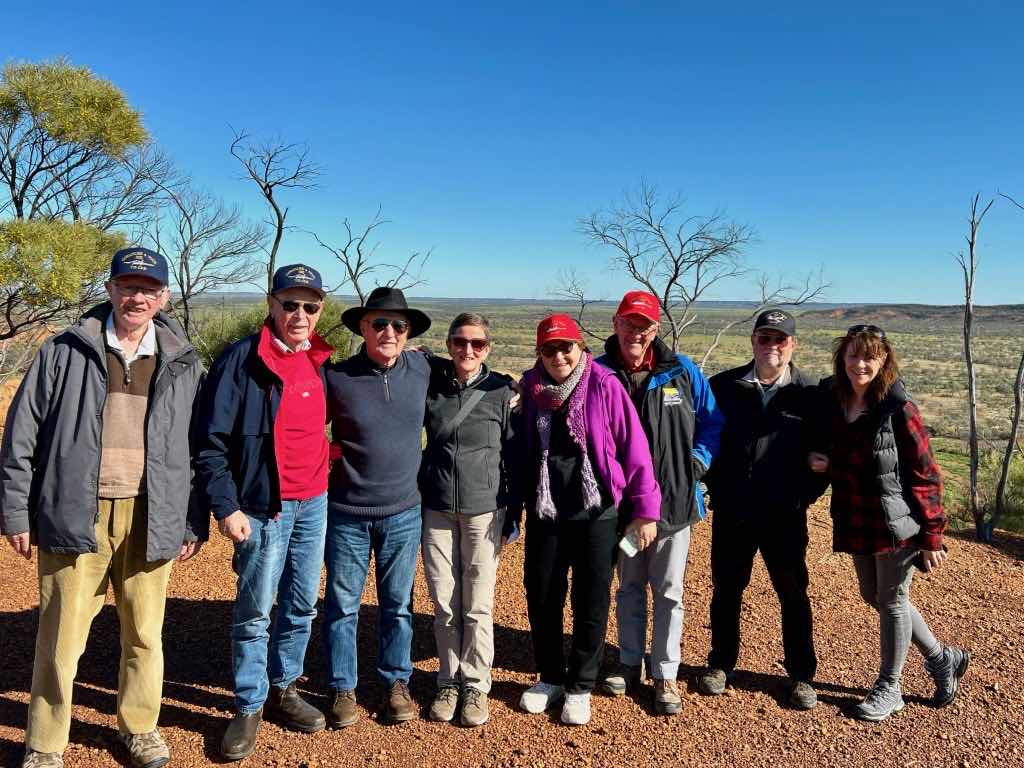
A group of mates and Silver Aviators still ‘waggling wings’.


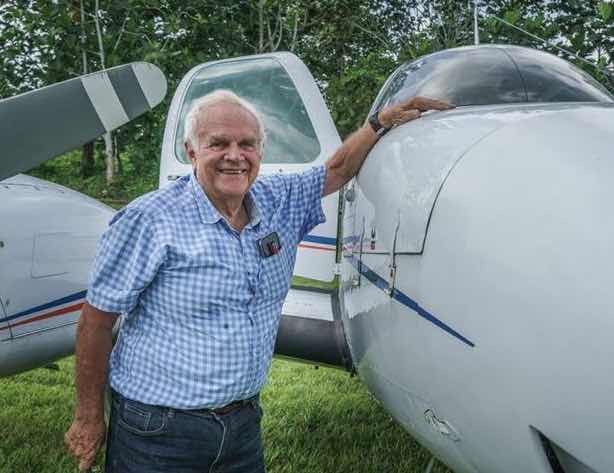
Silver Aviator, ‘Young Bob’ flys his Baron in the mountains of Papua New Guinea and is an United Flying Octogenarian.


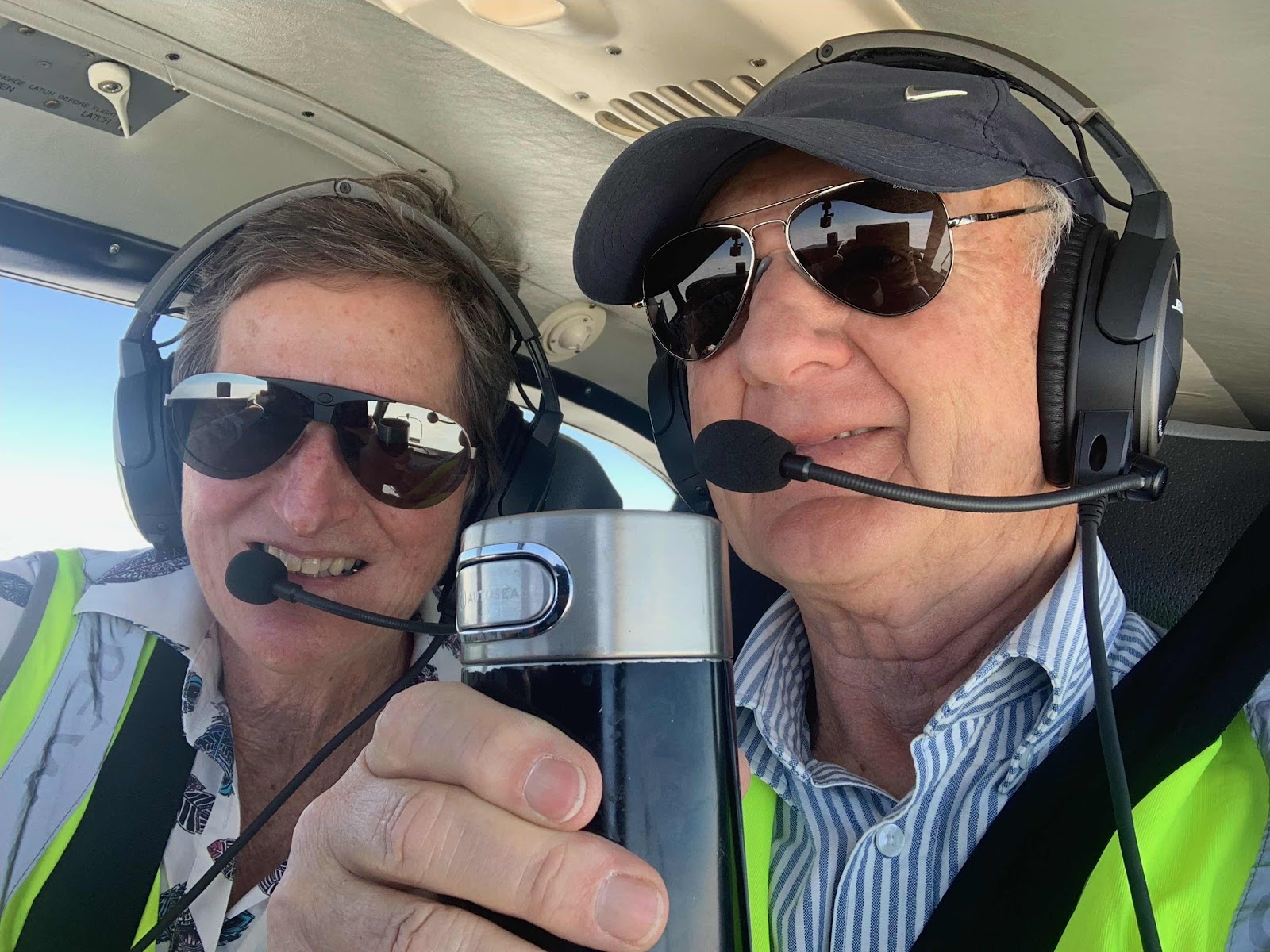
Bazflyers qualify as Silver Aviators


Fifties comic book superhero “Captain America”


Sunday, September 11, 2022

Cloud Piecer

Alpine mountains, at this time of the year all cloaked in pristine white snow, dominate the landscape surrounding Twizel. Visibly sentinel above all is New Zealand’s highest peak, Mount Cook at 12,218 feet (3,724 metres). History attributes the first sighting of this pointed peak to the British explorer, Captain James Cook in 1767. However, long before that time it had been indelibly imbedded in Māori myth as Aoraki, meaning the “Cloud Piecer”.

The first known ascent of Aoraki occurred on Christmas Day 1894. Sixteen years later in December 1910, Freda Du Faur an Australian, became the first woman to ascend the mountain. Aoraki Mount Cook and its surrounding peaks were also the training grounds of famous New Zealand mountaineer Sir Edmund Hillary. Hillary went on to be the first person in the world to summit Mount Everest successfully. and in recent years Aoraki Mount Cook has gone on to challenge hundreds more ambitious mountaineers.

Aoraki is considered a technically challenging mountain. Since the early 20th century, about 80 people have died attempting to climb the mountain, making it New Zealand's deadliest peak. Many more have died climbing in the locality and hardly a season goes by without at least one fatality. 

Beginning from the late 1960’s helicopters have beneficially been used to save many lives on Aoraki Mount Cook. A few such missions in the early seventies involved RNZAF Huey (UH-1) helicopters some of them flown at the time by Bazflyer1. In later years Bazflyer1 could also have been spotted flying AS350 and AS355 helicopters around the “Cloud Piecer” with tourists onboard.


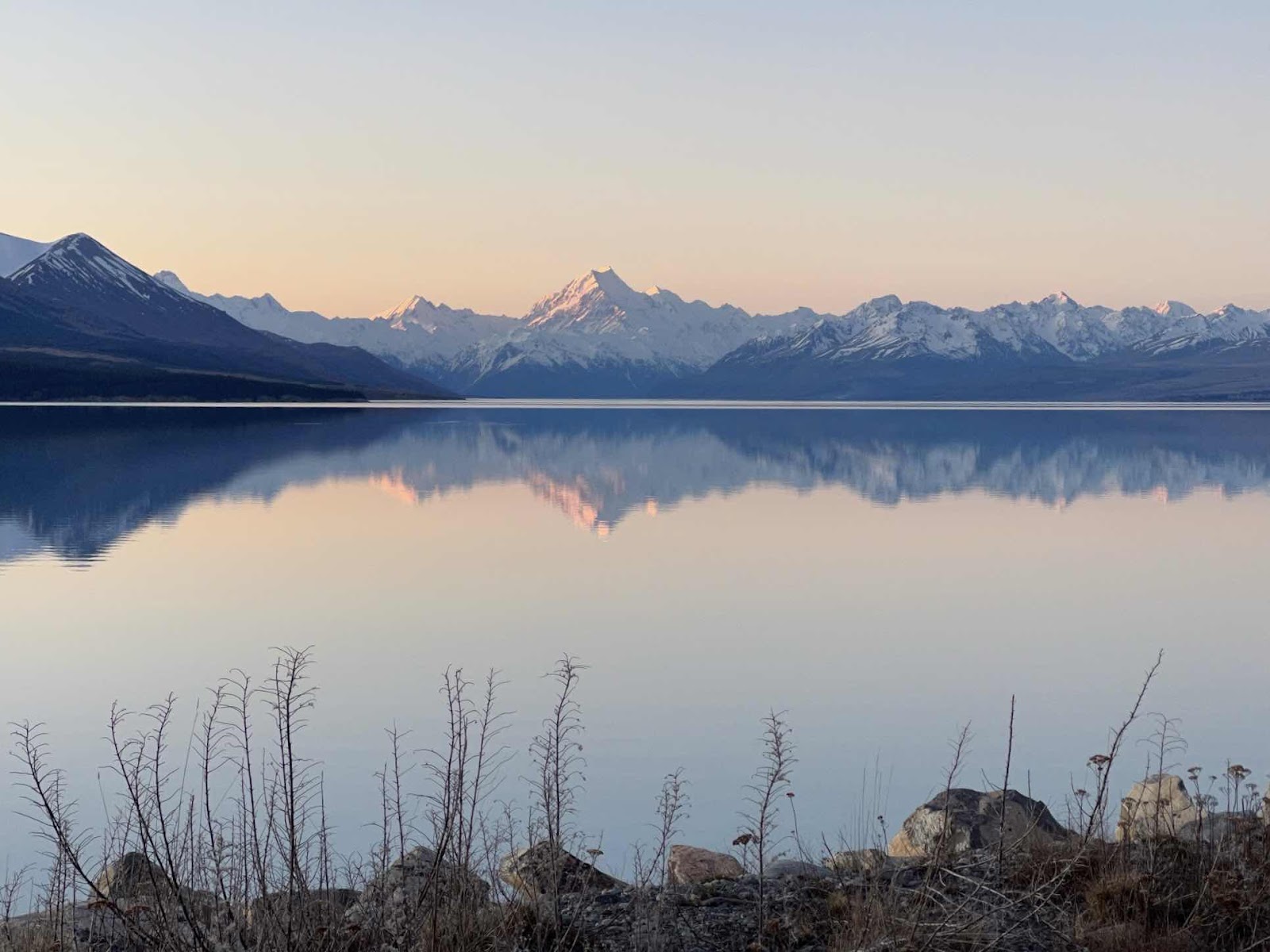
The “Cloud Piecer” bathed in sunset pastel as viewed across Lake Pukaki


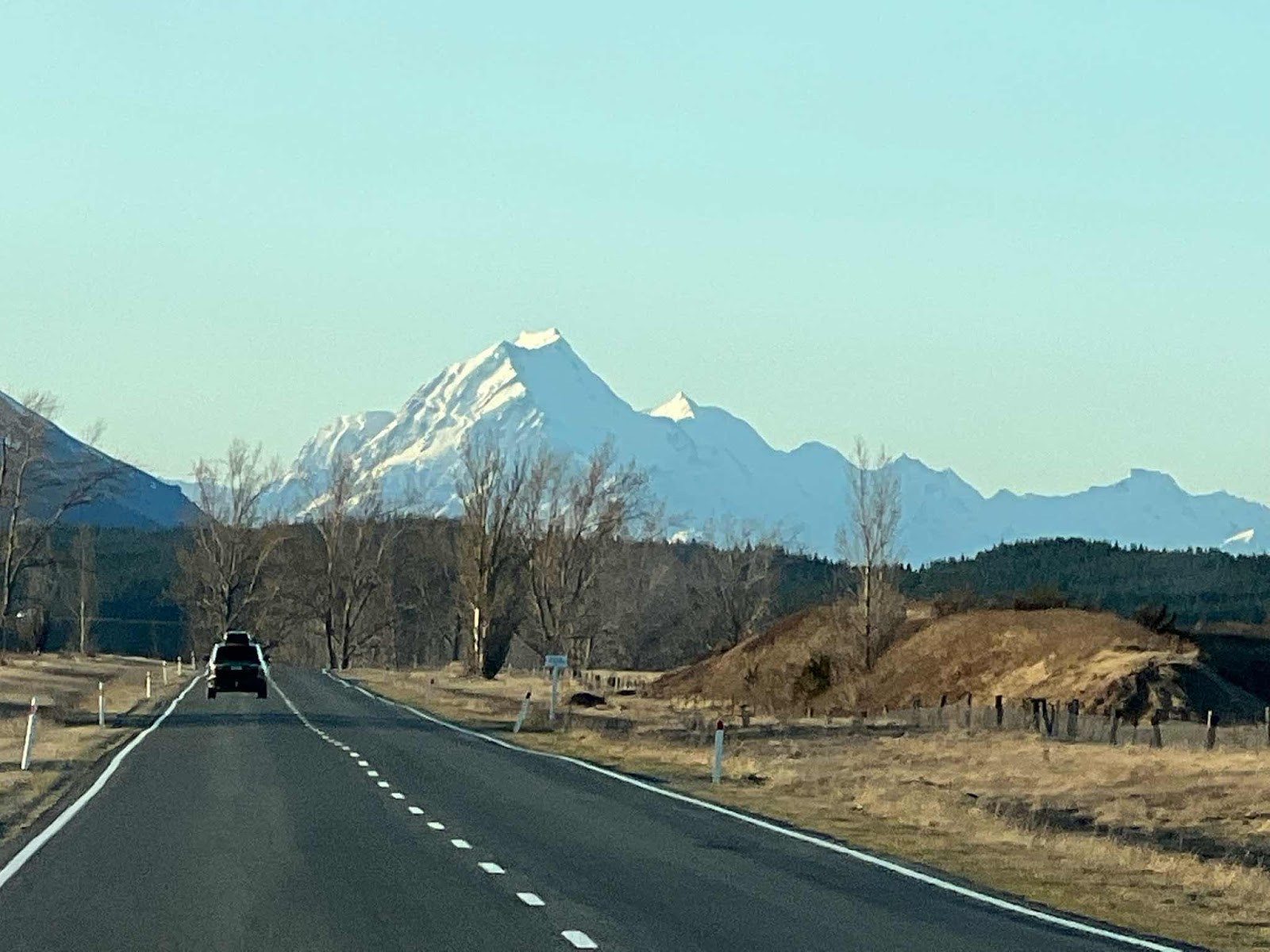
Aoraki Mount Cook up close


“Cloud Piecer” dominates the local landscape


Evening colours over lake Pukaki 


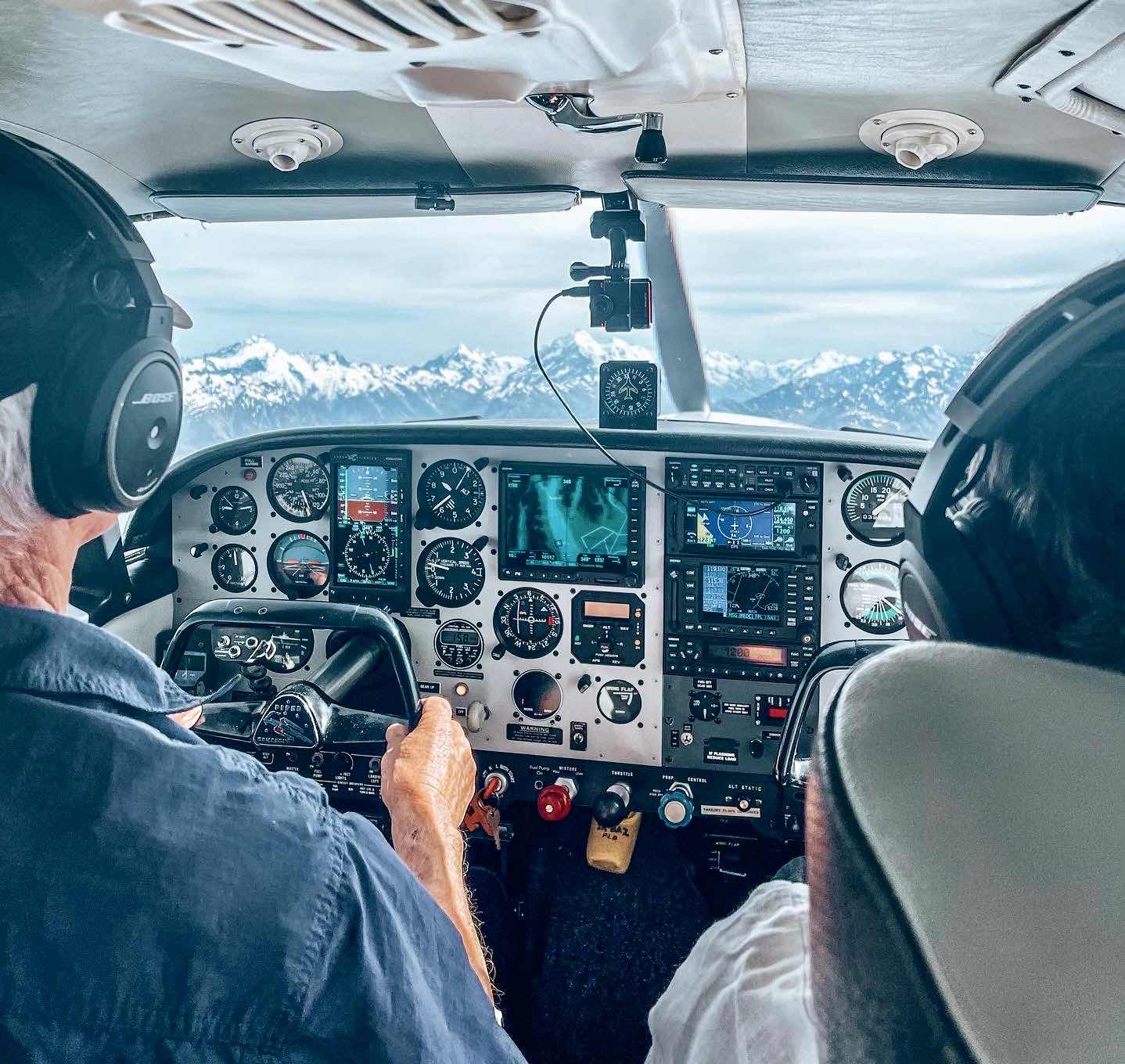
Approaching the “Cloud Piecer” in BAZ at 8,500 feet earlier this year


Saturday, September 3, 2022

Twizel Time

Occasionally it becomes a choice to leave the Comanche at home. This recently occurred when the Bazflyers accepted an assignment to spend a month in Twizel looking after two ‘grand-dogs’ named Brydie and Lola. 


Nestled up against the might Southern Alps, Twizel is the small town that was never meant to be. Born in the late ’60’s as a temporary settlement to house workers constructing a nearby hydroelectric scheme, it was intended to be demolished when its purpose had been fulfilled. However, twenty years later the remaining residents successfully fought to ensure their beloved community was saved…Twizel is nowadays home to around 1,600 residents and accommodates many more itinerant visitors during holiday periods.


As an interesting aside, the town’s name comes from the nearby Twizel River, in turn named after the historic Twizel Bridge in Northumberland that the Bazflyers visited during their 2019 Round the World flight.


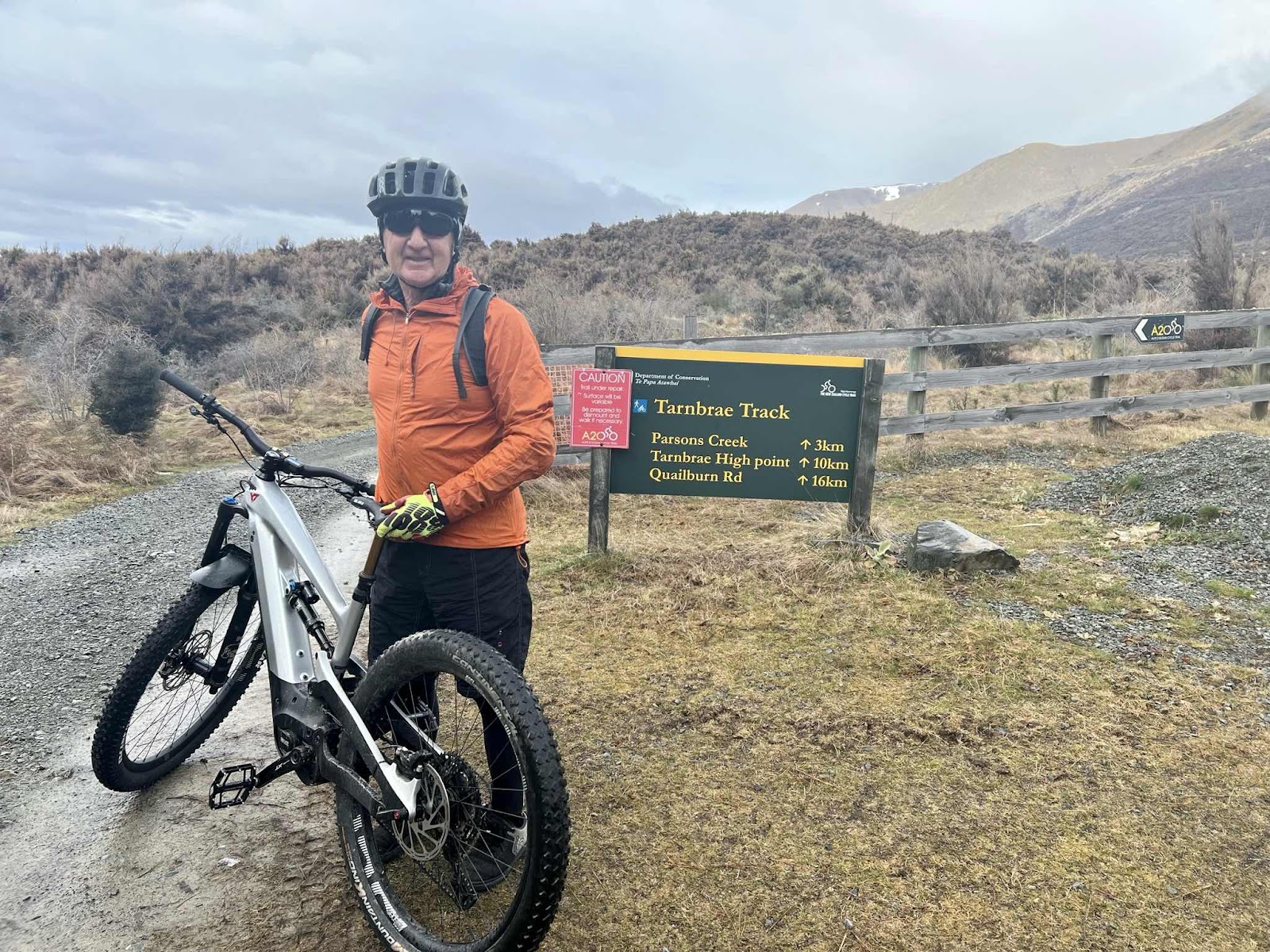
One of New Zealand’s iconic bike trails, Alps to Ocean, conveniently bisects Twizel. The lure of this more than 300 kilometre bike ride along rough high country trails and tracks was more than Bazflyer1 could resist. In keen anticipation the mountain bike also travelled by vehicle from the Bazbase. Why else would the Comanche be left at home in the hangar…?


Twizel is more than 1,000 kms by road and a ferry journey across Cook Strait from the Bazbase.


The township of Twizel is snuggled up against the Southern Alps


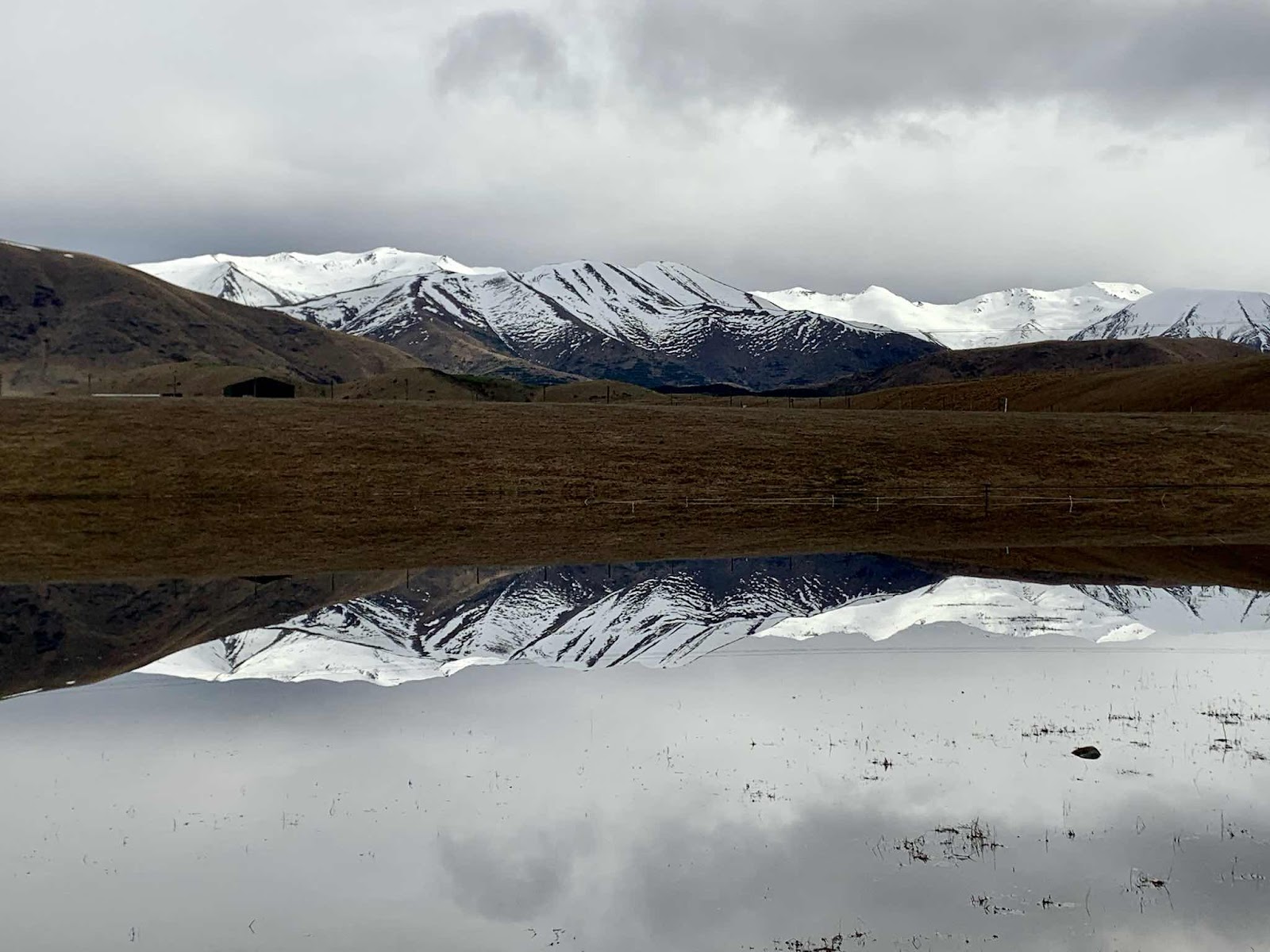
Reflections captured along the trail


Mount Cook at 12,218 feet (3,724 m) is New Zealand’s highest mountain viewed here on a cloudless day while out biking.


Bazflyer1 with his YT ‘Decoy’ mountain bike 


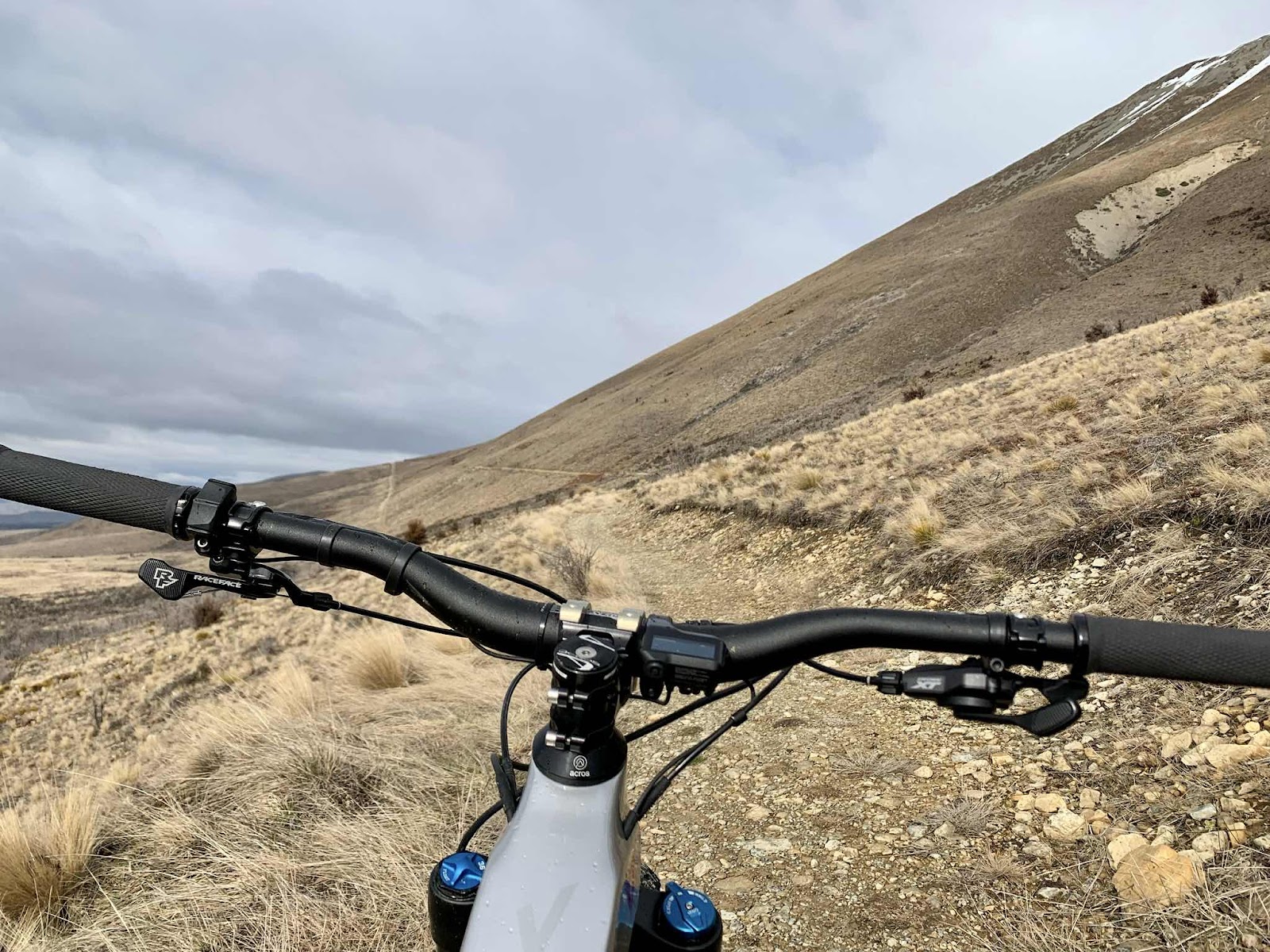
Looking along the trail ahead


The ‘grand-dogs’, Brydie (left) and Lola (right)


Friday, July 15, 2022

Channel Country

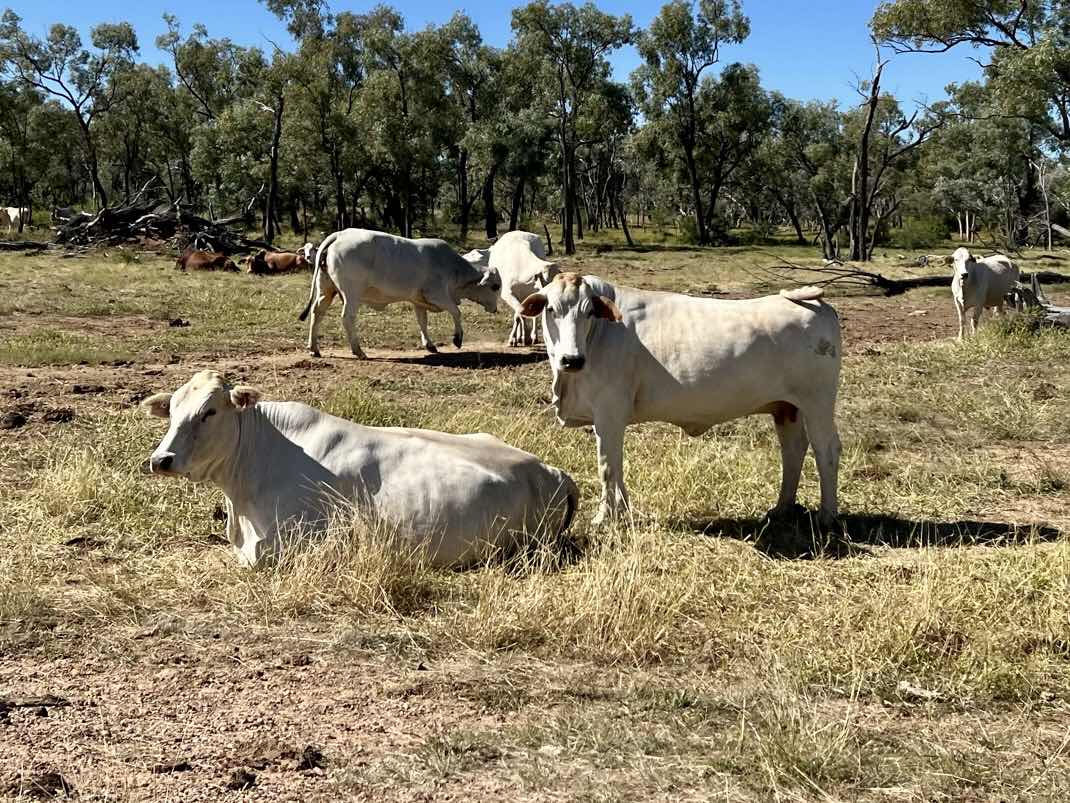
Aptly named the Channel Country, it covers a huge area, over 200,000 square kilometres, or by another measure it is a significant bite of Queensland’s Outback. Sparsely populated, less than 2,000 residents call the Channel Country home, but what this country lacks in population it makes up for with cattle; it is graziers territory.

This part of Australia is a series of ancient flood plains within an arid landscape. However, when the area gets enough rainfall, the Channel Country comes to life – from dry dessert channels to flowing waterways – from cracked golden earth to a lush green carpet of grass…and those once in a decade rains arrived earlier this year. As the water flows downstream on its long journey to a normally dry Lake Eyre, it forms a myriad of channels and spreads across wide open plains. 

What better way to get the full Channel Country experience than a birds-eye-view from the trusty Comanche. Then touch down at some of its small remote settlements to meet the people who live and work on this outback land. The Bazflyers did just that…


YBOU = Boulia, YWTN = Winton, YHUG = Hughenden 


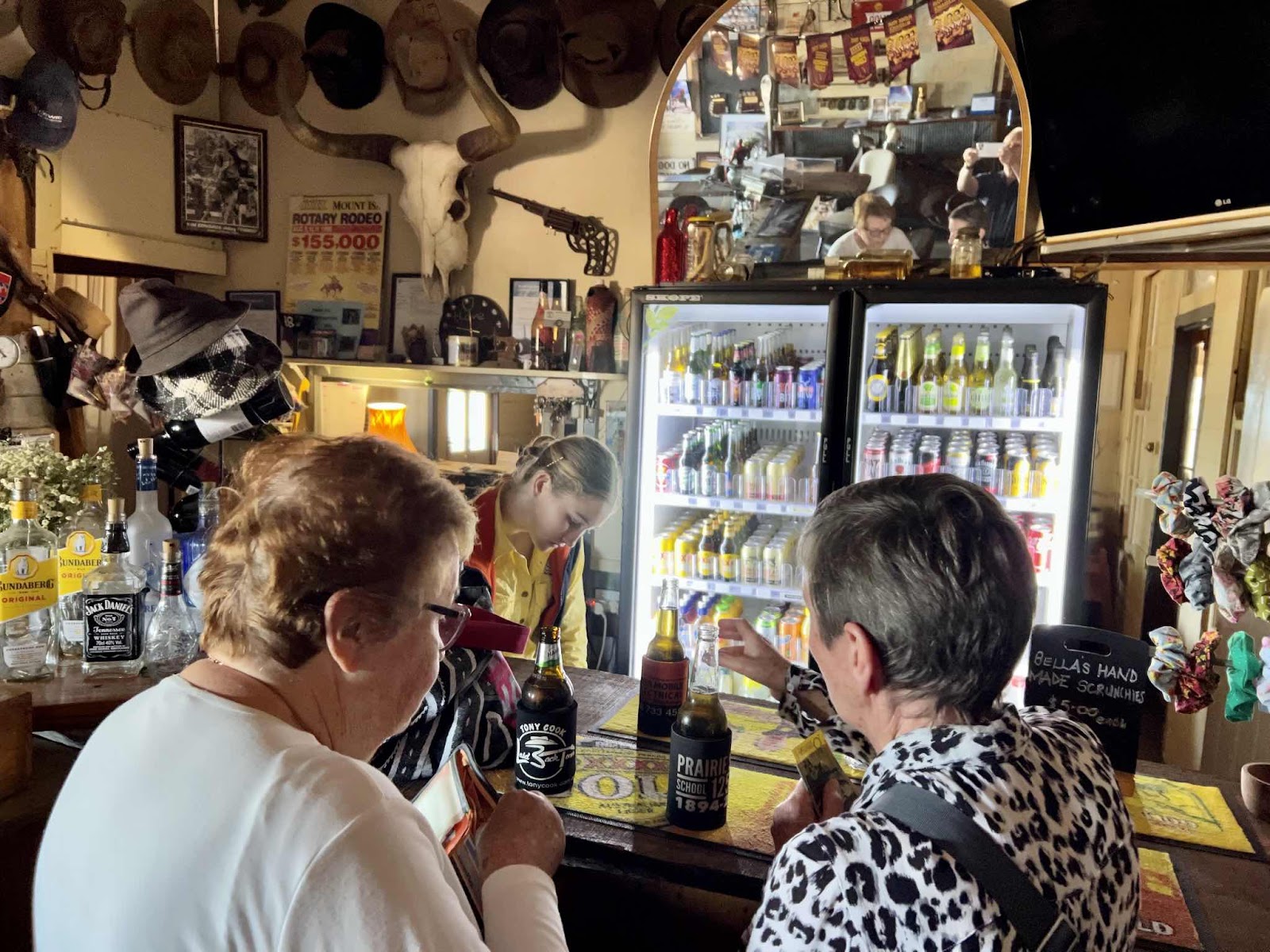
Boulia - a tiny almost forgotten settlement on the crossroads to everywhere else. In a much earlier time the tiny town had pubs, lots of pubs where itinerant shearers congregated. Today there’s just one pub. It was busy in the evening serving grub and drinks, but then in the words of a local inhabitant our stop-over coincided with the tourist season, an annual phenomenon of outback travellers passing through that lasts perhaps a week before the heat and flies again return. 


History and stories abound. There was a chat with Mary. Now in her middle years, she was born in Boulia and lives on a station property just outside of town, about an hour’s drive away. A third generation grazier who’s experienced her share of droughts, hard times and bad times. Today with the Channel Country coloured green and waterholes overflowing, Mary and her family stand on the cusp of an infrequent very good time for farming in the outback.

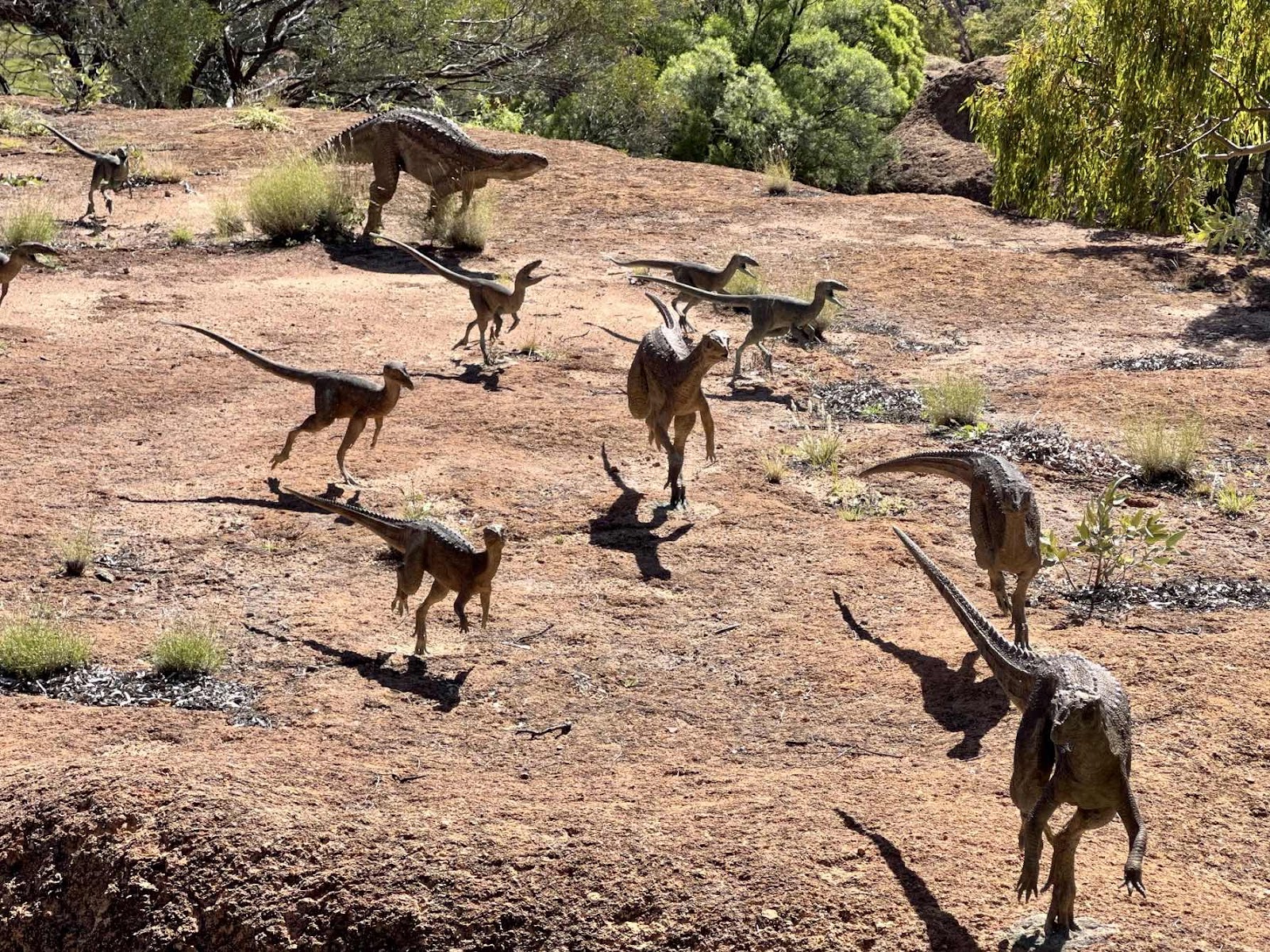
Winton - is another Channel Country town with its own unique stories to tell. Around 95 million years ago the vast surrounding lands were lush forests on the shores of a huge inland sea. An environment that hosted Dinosaurs and an abundance of prehistoric sea life. Winton affords an unique opportunity to view rare fossils, dinosaur footprints and bones. It’s a place where the imagination can be transported back to a time, an almost incomprehensibly long time ago.

Not nearly so long ago, 1895 to be exact, the iconic Australian poet Banjo Patterson was staying in Winton when he was inspired to deliver the first performance of his great Australian anthem, ‘Waltzing Matilda’. 

Hughenden - another small Channel Country town was founded by pastoralists, riding on the sheep's back with a thriving wool industry. But droughts, mechanisation and poor commodity prices have greatly reduced its population over the years. Today there are only a few hundred people to fill the town’s ultra wide streets. 

Remarkably, Hughenden’s declining population and fortunes is being turned around with economic diversification. Better utilisation of the region's water for crop irrigation, and two large scale solar and wind power schemes. Haley’s an entrepreneurial young person who left the area after finishing school but recently returned and operates a thriving coffee cart located beside the main highway bisecting the town. Hughenden has every prospect of fulfilling her ambitions and anyone else who decides to seek their future in the Channel Country.


Monday, July 11, 2022

Comanche Corroboree

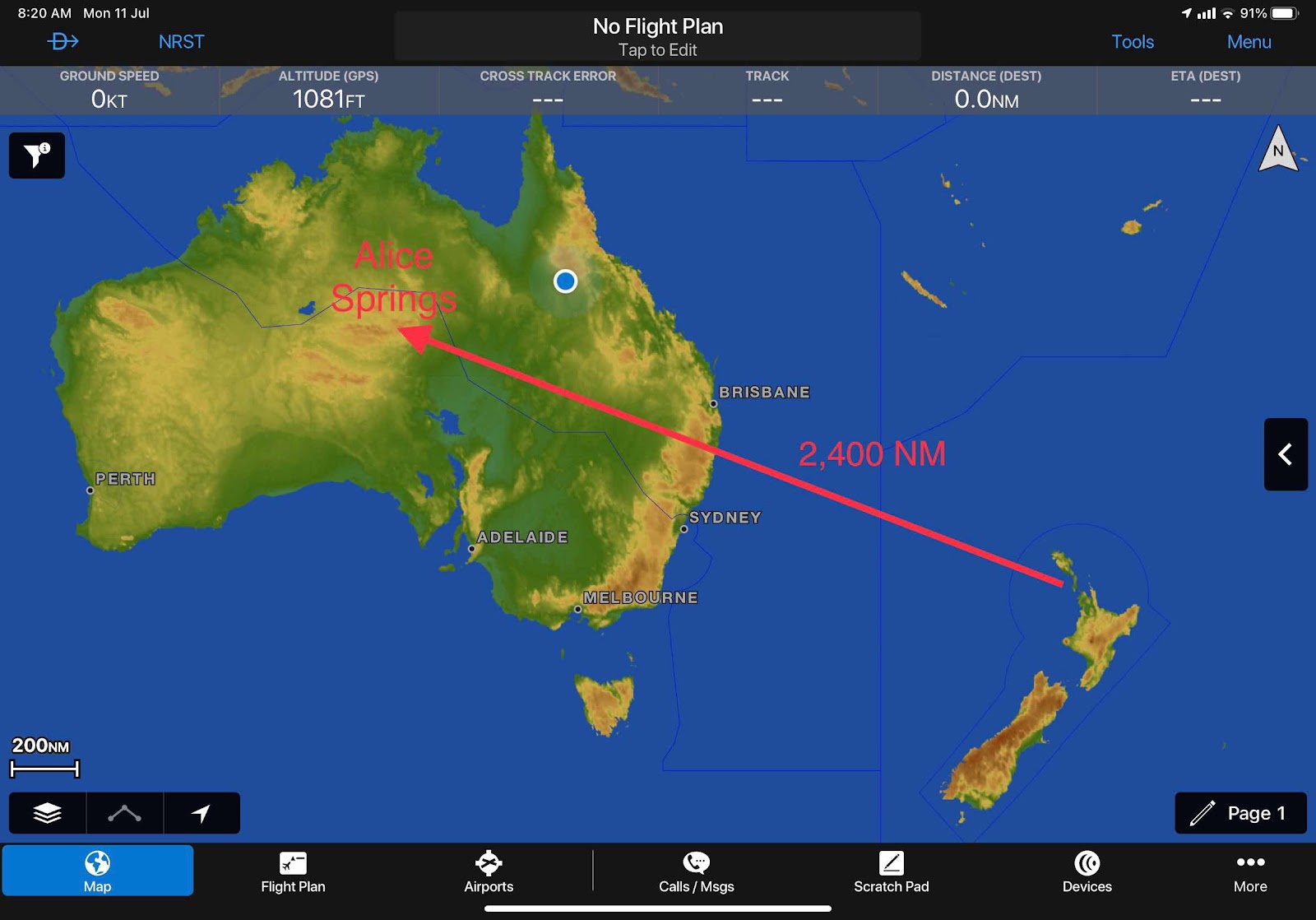
Corroboree is a word coined by the European settlers of Australia for a customary gathering of the country’s Indigenous people, usually accompanied by rituals and music. So when a group of pilots, all owners of Piper Comanche aeroplanes, gathered together at Alice Springs, a town situated in the very heart of Australia, it could aptly be described as a Comanche Corroboree. Fortunately in a traditional sense, Corroboree’s welcome outside participation and it was in this spirit the Bazflyers flew the trusty Comanche 2,400 NM (4,400 km) from New Zealand to also be in Alice Springs, once again.


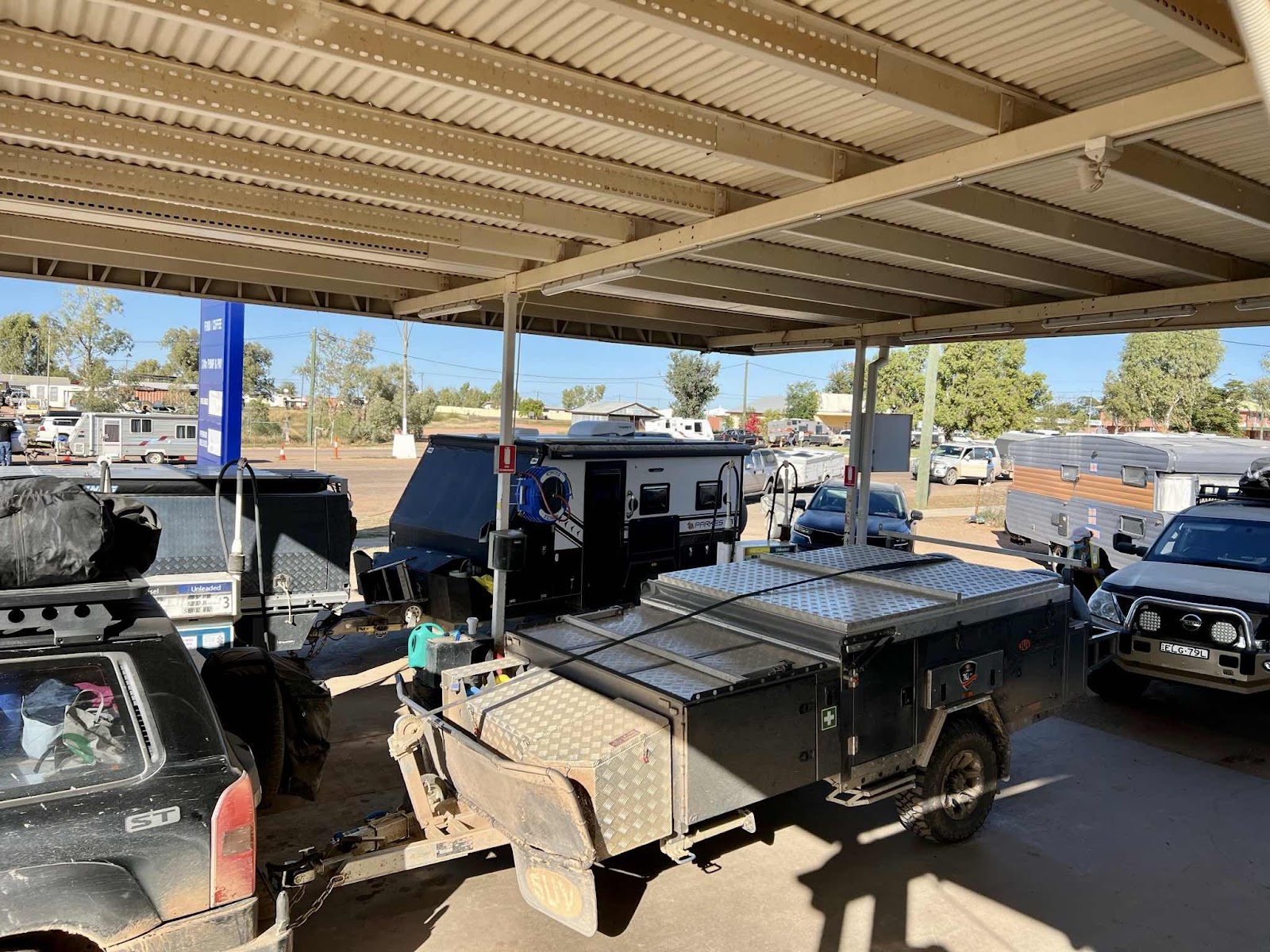
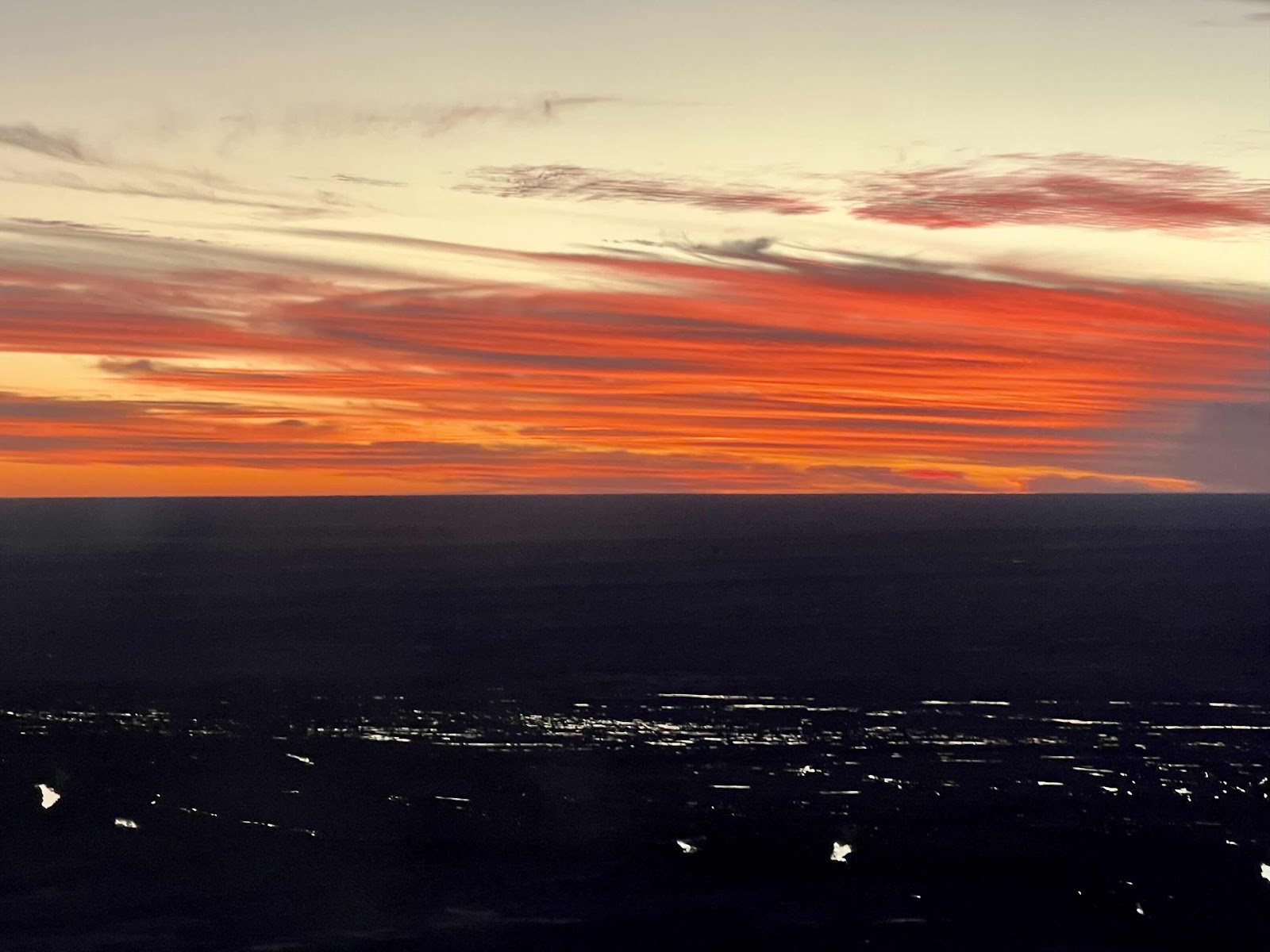
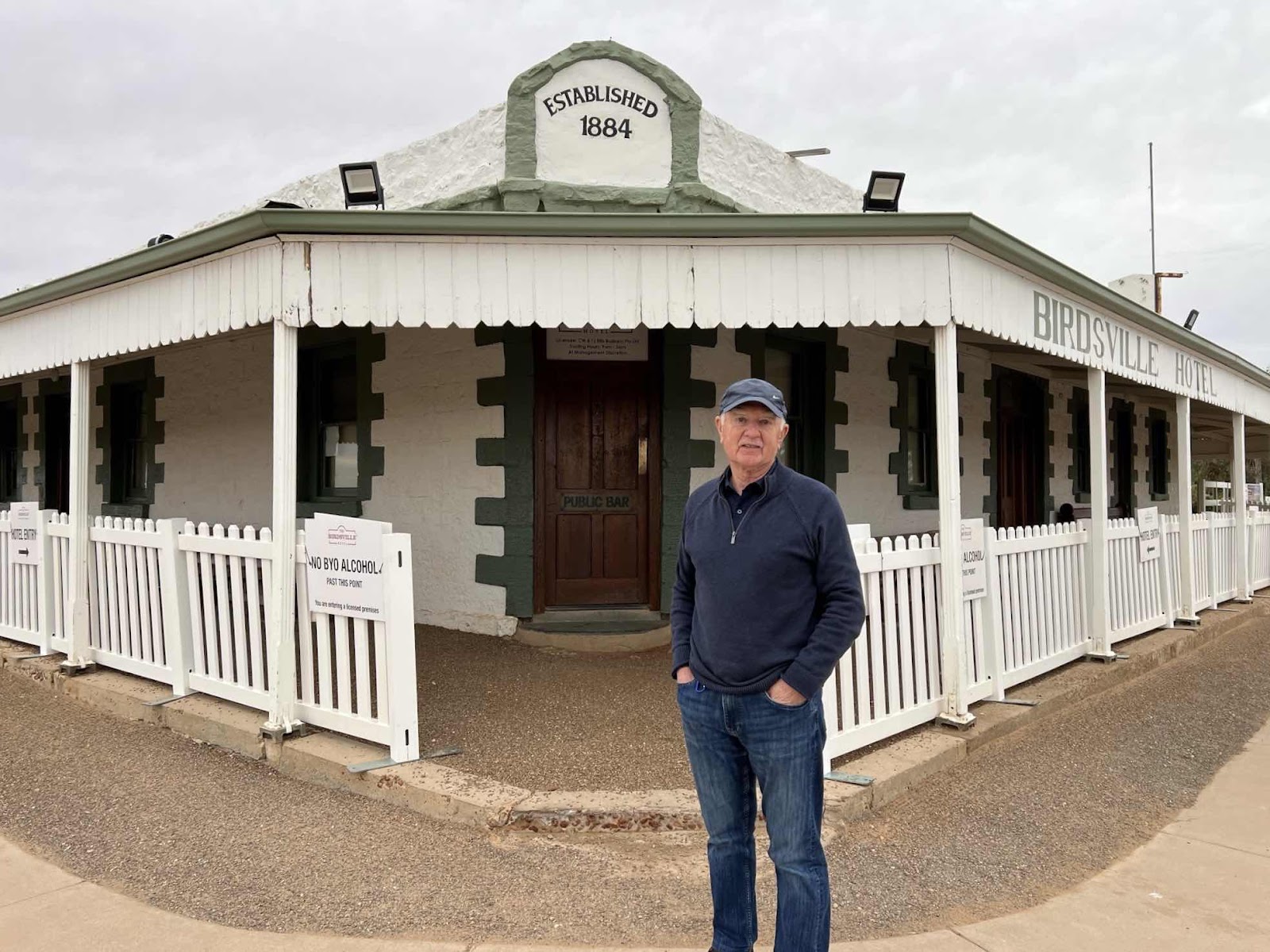
Australia is one big country and this means it’s a long way to Alice Springs from almost anywhere. Like the other Comanches making their way into Alice for the Corroboree, the Bazflyers also opted to include an on route overnight stop and the remote, small settlement of Birdsville was chosen for this privilege. The latter part of this westward flight was into a spectacular setting sun and ended with an evening arrival. 


Deep in the heart of wild and isolated country, Birdsville is remote. Normally home to a population of just 140 folk, the pub was buzzing when the Bazflyers arrived. During the cooler winter months thousands of Australians hitch a caravan to their 4x4 vehicles and head off out into their own big backyard. Then there was also early arrivals for the Big Red Bash, an iconic multi-day music festival held annually in the nearby dessert. 


Next morning four other Comanches flying from locations further south, stopped in at Birdsville to take on fuel. The Bazflyers joined them for the remaining two hour run into Alice. The downwind leg for landing on Runway 12 at Alice provided a bird’s eye view of many airliners still in Covid storage. 


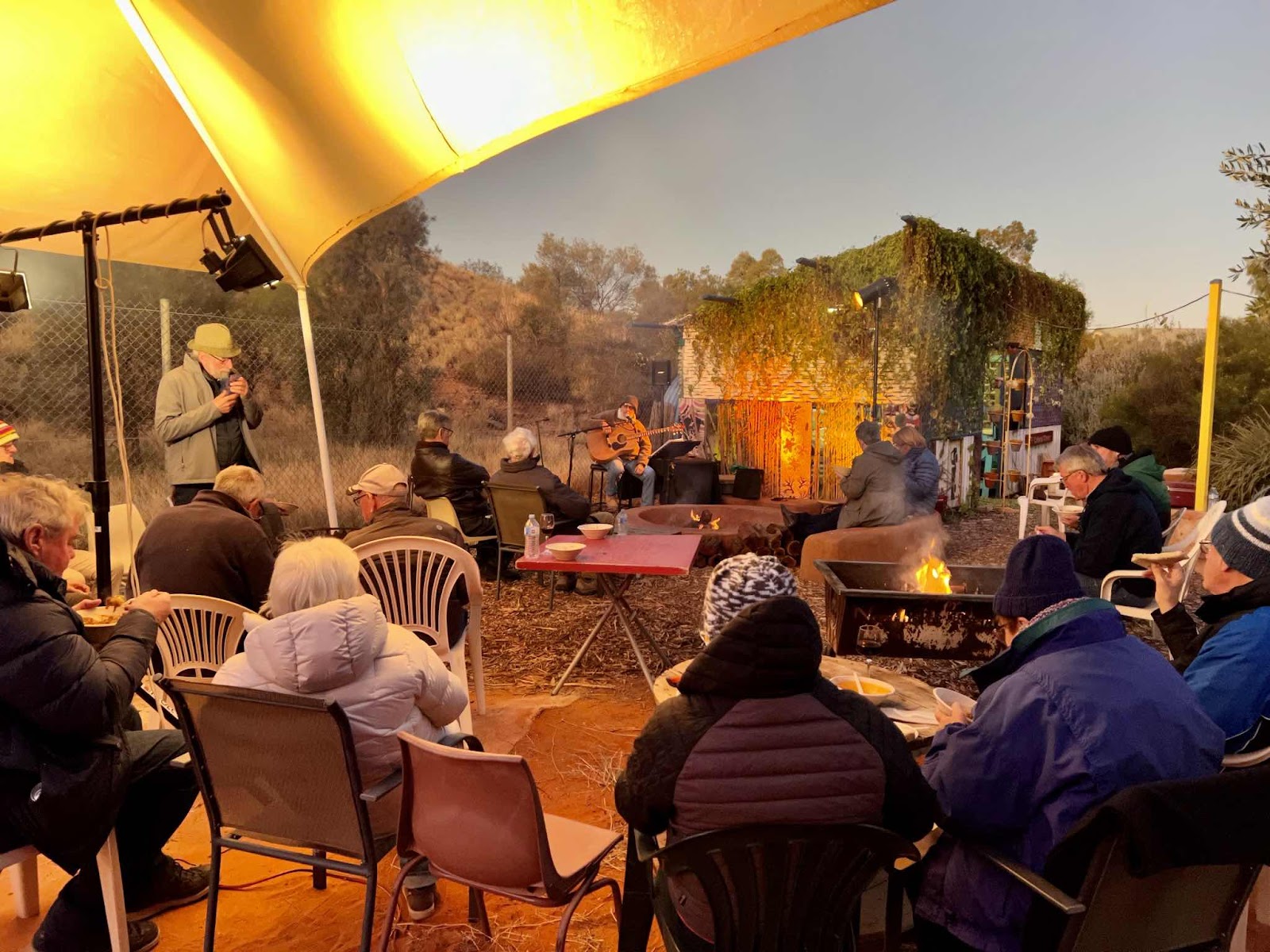
As for the ensuing three day corroboree….the ritual was talking about and comparing Comanche aeroplanes, while the music was at night huddled around a campfire. 


Sunday, July 10, 2022

Seventeenth Time

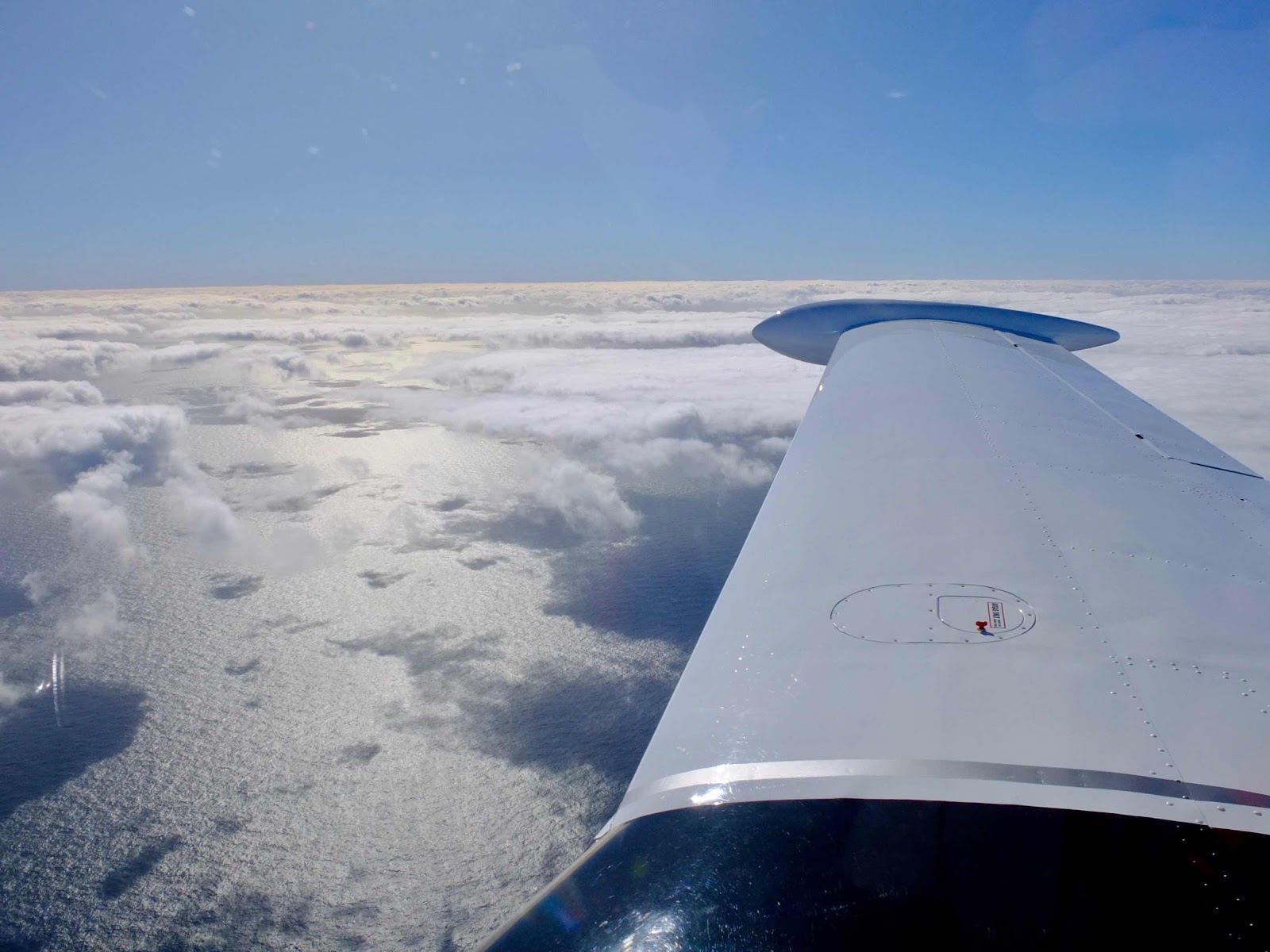
There happens to be nothing significant about the title of this blog other than it records my seventeenth flight over the Tasman Sea in the trusty Comanche, ZK-BAZ. The flight was from Kerikeri in the north of New Zealand direct to Coolangatta Airport south of Brisbane. Furthermore, this achievement was undertaken on my own as Bazflyer2 had flown commercial to Australia about a month earlier.

Like all of the sixteen previous crossings, this one followed prior analysis of weather forecasts in an attempt to choose a suitable day in time. June is winter down under, a time of the year that is not exactly renowned for settled weather conditions. Not too much of a headwind is critical, and of course a tailwind component would be optimal. Then there is the matter of cloud along the way. Because of low ambient air temperatures at this time of the year, cloud can always hide icing and this is definitely to be avoided. 

As luck goes, I got lucky. The clockwise recirculating air flow of a Southern Hemisphere low pressure system off the north of New Zealand was offering a ‘sling-shot’ tailwind effect along with favourable flight conditions out in the Tasman Sea. 


Apart from the prospect of a wet beginning, the cloud forecast at my proposed 8,000 feet cruising altitude promised a sunny journey. 

The day was chosen and Custom’s notified. Then right on form it was a wet instrument departure out of Kerikeri but even while climbing to cruise altitude the ground speed teasingly indicated 160 knots. An hour later rain and cloud gave way to sunshine and best of all, a continuous ground speed that was never less than 170 knots. 


This all added up to be my fasted westerly Tasman Sea crossing ever…1,145 nautical miles in 6 hours 45 minutes. With Customs and Quarantine formalities complete the Bazflyers were reunited again and ready for another Australian adventure. Perhaps ‘seventeen’ is significant after all….