Translate

Saturday, May 18, 2019

Runway 6 Left

Guam is an island in Micronesia far out in the Western Pacific. It is part of the United States, a territory and not one of the 50 U.S. States. Because its location lies somewhat equidistant between Mount Hagen and Kagoshima Airport in southern Japan the island of Guam was chosen for a ‘Bazflyer RTW 2019’ refuelling stopover and so it was that 7 hours and 45 minutes after taking off from Mount Hagen the Bazflyers touched down at Guam Airport. 

Fifty years earlier, very close to the same day, round the world pilot Cliff Tait flew from Truk Island to Guam. In his book “Flight of the Kiwi” Cliff describes conditions flying through the Intertropical Convergence Zone, the ever present band of convective weather activity near the equator that often generates vigorous thunderstorms over large areas. In contrast to Cliff’s flight the Bazflyers were able to pick a smooth and uneventful track across the zone.

Cliff Tail describes his first sighting of Guam and radio frequency change to Agena (Guam) Tower. “Agena seemed somewhat mystified. Who were we? What sort of aircraft? Military or civilian? Where did we come from?” He further writes, “….clearance was granted to land runway 6 left”.

In a remarkable coincidence Guam Tower also cleared ZKBAZ to land at Guam on Runway 6 Left. It was one moment the Bazflyers shared with Cliff Tait as he relates in his book. “Below and ahead lay the biggest runway I had ever seen. All concrete, it stretched for nearly two miles”. 

Guam is an interesting place to visit. It became a U.S possession as a consequence of the Spanish-American war. It was a prize of war. Then on December 7, 1941 just one hour after the surprise attack on Pearl Harbour, Japanese forces landed on Guam. So began 36 months of Japanese occupation ending only after US forces recaptured the island. The ensuing Battle of Guam was one of the fearest fought battles of the long Pacific Campaign.  

Guam has its own native population, the Chamorros. A people who from the time of Spanish occupation right up to the present day, have never had a say in their political status.

The US relationship to Guam has delivered citizenship and higher standard of living to the Chamorros. Their youth have more options. However, paradoxically they have no vote in Congress or for the president. The island has almost no political power, and little control over how the U.S. uses it.

During their stay on the island of Guam, the Bazflyers were warmly hosted by Chamorro Tom and his wife, MiMi. Despite the turmoil of their island’s history these folk couldn’t have been more forgiving of the past or positive about the future. Then to add another fascinating twist, their home where the Bazflyers stayed is not far from the threshold of Runway 6 Left.

Picking a flight path across the Intertropical Convergence Zone


Looking out towards Runway 6 Left and the town of Agena

Chamorro food is as delicious as it looks and smells


The Pacific War was devastating for the Chamorro people


Tom and MiMi


Saturday, May 11, 2019

Trans Niugini Tours

Papua New Guinea (PNG) is like no other place you’ve ever been. It’s a diverse country of tropical beaches, picturesque islands, volcanos, rain forests, great river systems and high mountainous terrain. It was 42 years ago this month when the Bazflyers first arrived in PNG and made the country their home for a decade. Bazflyer1 covered every nook and cranny of the country flying helicopters and airplanes. Bazflyer2 taught in schools. Their children grew up. It is no coincidence then that PNG occupies a special place in the Bazflyer archives.


There were several reasons why the highlands settlement of Mount Hagen was chosen by the Bazflyers for their PNG stopover. It is conveniently located for a comfortable seven and a half hours flight out to Guam, the next port of call on RTW 2019. Being just 5 or so degrees south of the equator and at an altitude of some 5,500 feet, Mount Hagen has a relaxing year-round temperate climate that is close to idyllic. But, the real compelling reason to touch down at Mount Hagen was to renew a long standing acquaintance with local legend...Bob. 


Bob hails from Australia but for more than fifty years PNG has been his home. Bob’s entrepreneurial talent has a visible legacy in Trans Niugini Tours but not so widely known is his lifetime of aviation. For those who know Bob well enough, he is synonymous with Beechcraft Baron, P2-BOB. The two have been an item for a very long time. However, only a few of the people who know Bob are also aware of his equally legendary aviation adventures. Many of them chronicled at Bob’s Flights.


Bob’s exploits extend far beyond tourism and flying. He is an accomplished road and bridge builder as well as a master property builder....yes, ‘Bob the Builder’ does come to mind! Bob’s building prowess is well showcased with his six unique tourist lodges culturally sited around the PNG mainland, plus his amazing river vessel the Sepik Spirit. 


Like each of Bob’s properties, Rondon Ridge Lodge, where the Bazflyers are presently staying, is typically unique in its design and culture. It sits at 7,100 feet above sea level with panoramic vistas overlooking Mount Hagen and the surrounding highlands. Wonderful friendly staff. A truly special place....but then the whole Trans Niugini Tours enterprise is the epitome of a very special person. It’s a privilege to know you ...Bob!


Sky road from Horn Island (YHID) to Mount Hagen (AYMH) in Papua New Guinea


Bazflyer at Rondon Ridge Lodge. Like no other place you’ve ever been...add Trans Niugini Tours to your ‘bucket list’...


Panoramic vista from Rondon Ridge looking out over Mount Hagen


Bob, overseeing the construction of his new road from Mount Hagen up to Rondon Ridge


Thursday, May 9, 2019

Angel Number

Number 77 comprises two lucky sevens and is said to be an angel number. However, as the Bazflyers prepared to land BAZ on Horn Island today, an island located in the Torres Straits at Australia’s northeastern extremity, the number 77 assumed a special significance. 


Horn Island, similar to several other places along Australia’s northern coastlines, experienced numerous Japanese aerial attacks during the Pacific War. Over the course of the campaign, more than 150 military personnel lost their lives defending Horn Island and the surrounding area, and more than 80 civilians also died. 


Today marks exactly 77 years since the largest navel battle that has ever been fought in the South West Pacific region. This was the Battle of the Coral Sea. This battle ended Japanese attempts to launch a seaborne invasion of Port Moresby and has long been regarded as “the battle that saved Australia and New Zealand”.


Allied forces had cracked the main Japanese communication codes and were waiting for the attack. An American carrier force and allied support warships moved into position to stop the Japanese. A major battle was fought in the waters southwest of the Solomon Islands and ended 77 years ago today on the 8th May 1942. It was a battle fought entirely by aircraft attacking ships, with the opposing ships never firing at each other during the battle.


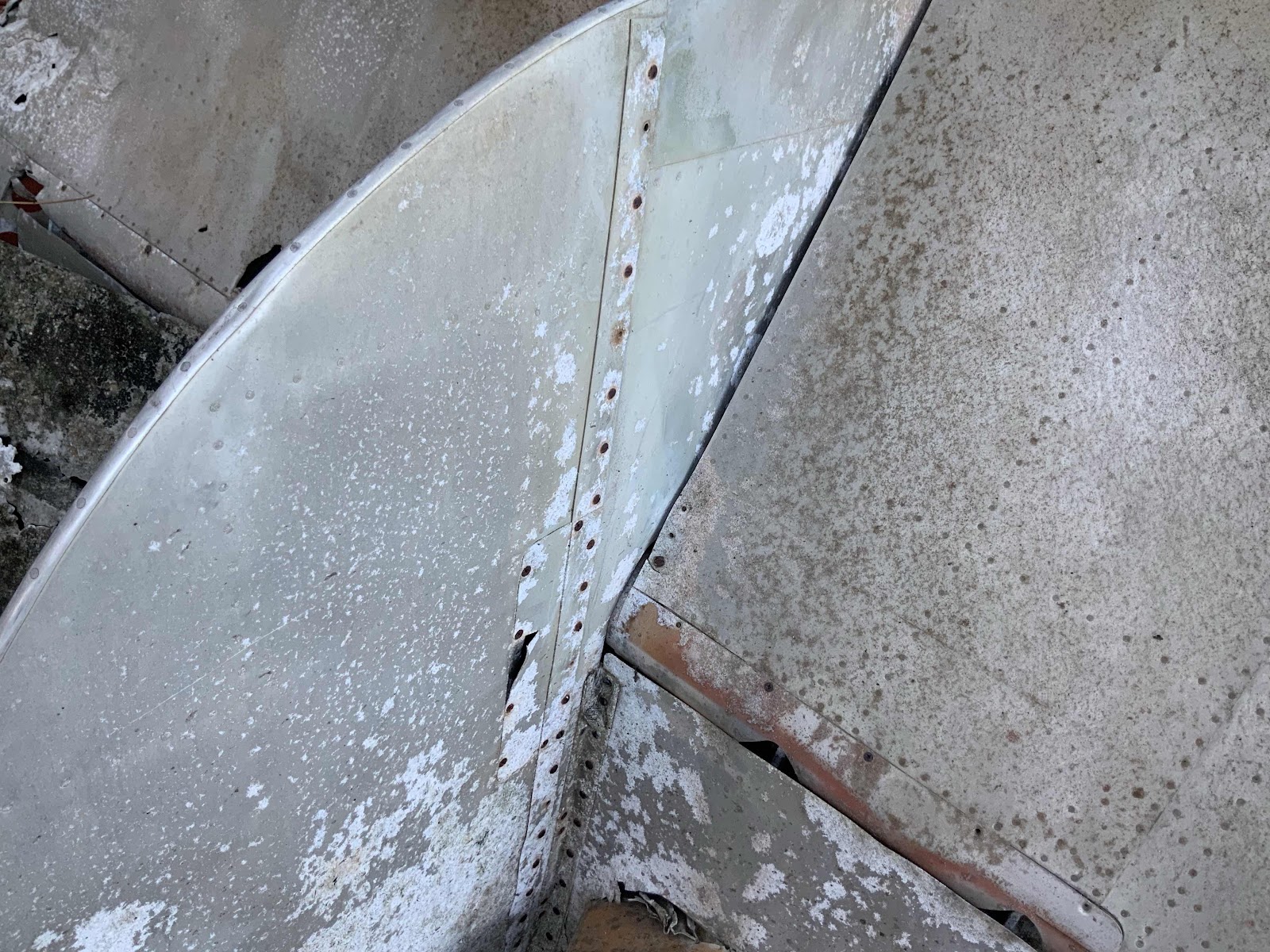
Tail piece from a Hudson Bomber damaged during the first air raid on Horn Island.


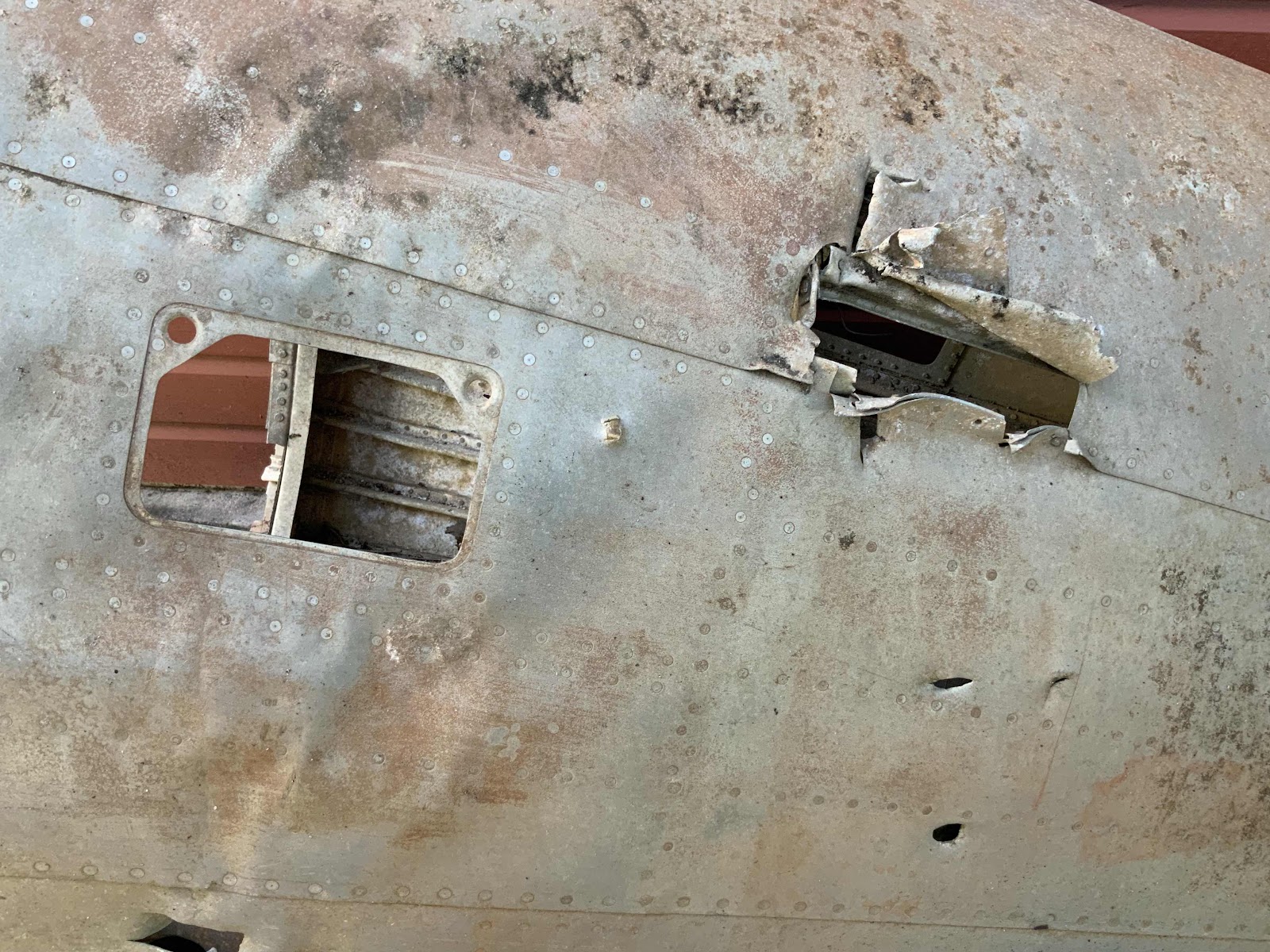
P47 Thunderbolt fuselage.


The early RAAF Roundel is still visible on this Hudson wing. Allied forces confused this Roundal for being Japanese, which was predominantly red. The Roundal was soon changed to a less confusing mark.


Wednesday, May 8, 2019

The ‘Towers’

Some centres of population, probably most in reality, owe their existence to a purposeful or strategic location. Perhaps it was a suitable port for seagoing vessels, or a place accessible by river craft. However, in some cases it was simply because someone discovered gold and in that case distance or tyranny was to be endured. The inland Queensland rural town of Charters Towers is one such example.


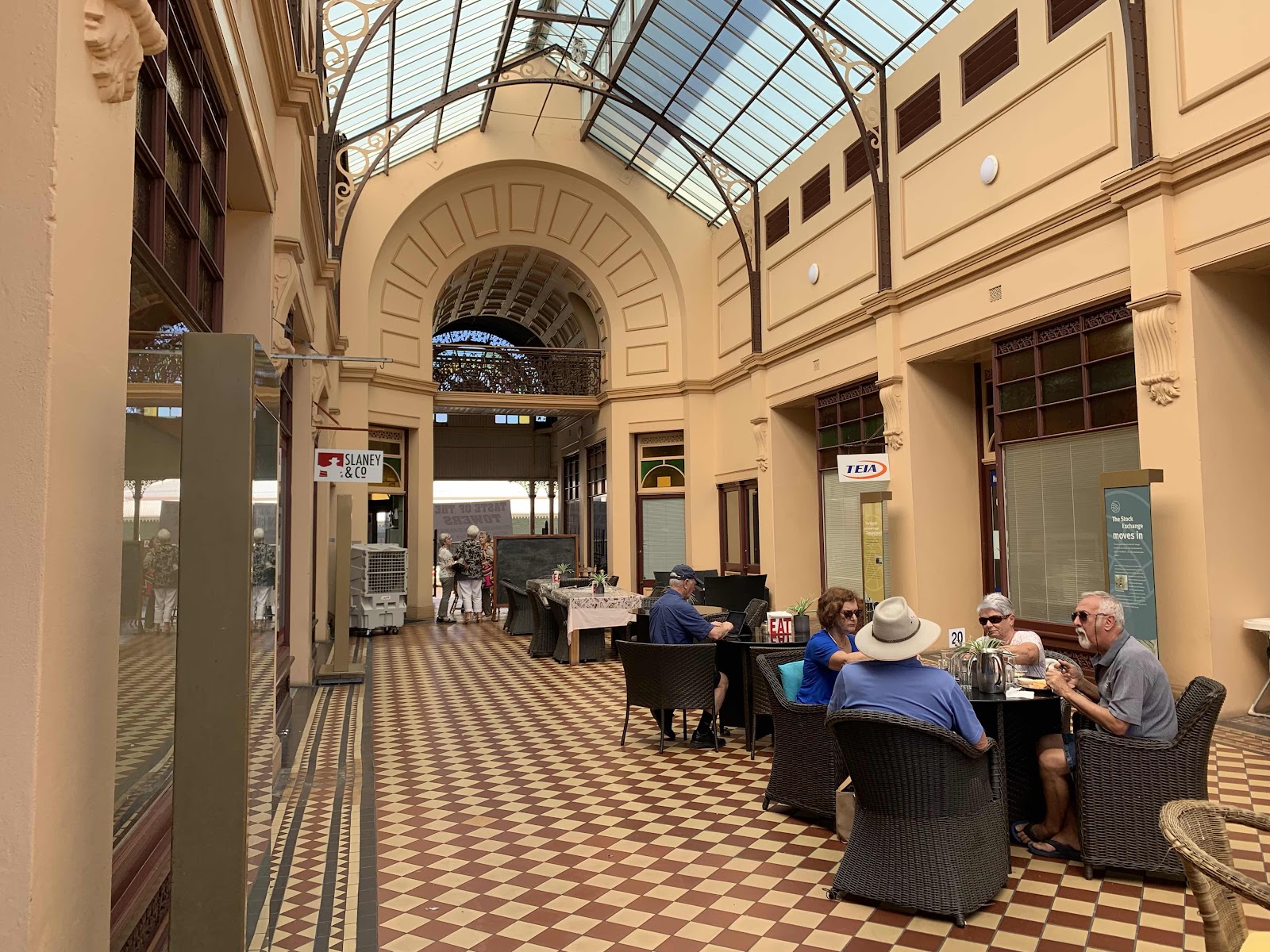
A gold discovery in 1872 founded Charters Towers and for thirty years it bought activity and people to the town. During that time the town’s population swelled to more than 27,000 and Charters Towers was Queensland’s largest city outside of Brisbane. The town also operated one of the few Stock Exchanges outside of a capital city. Affectionally known as ‘the world’ it was said that anything one might desire could be had at the ‘Towers’ leaving no reason to travel elsewhere.   


Today it is a very different activity that fuels the local economy. It is education. From distance education to boarding schools, Charters Towers has it covered. However, mining still has a place. The surrounding region is rich in coal and huge open-cut mines nearby provide jobs for anyone who desires to make their future in this unique outback community.


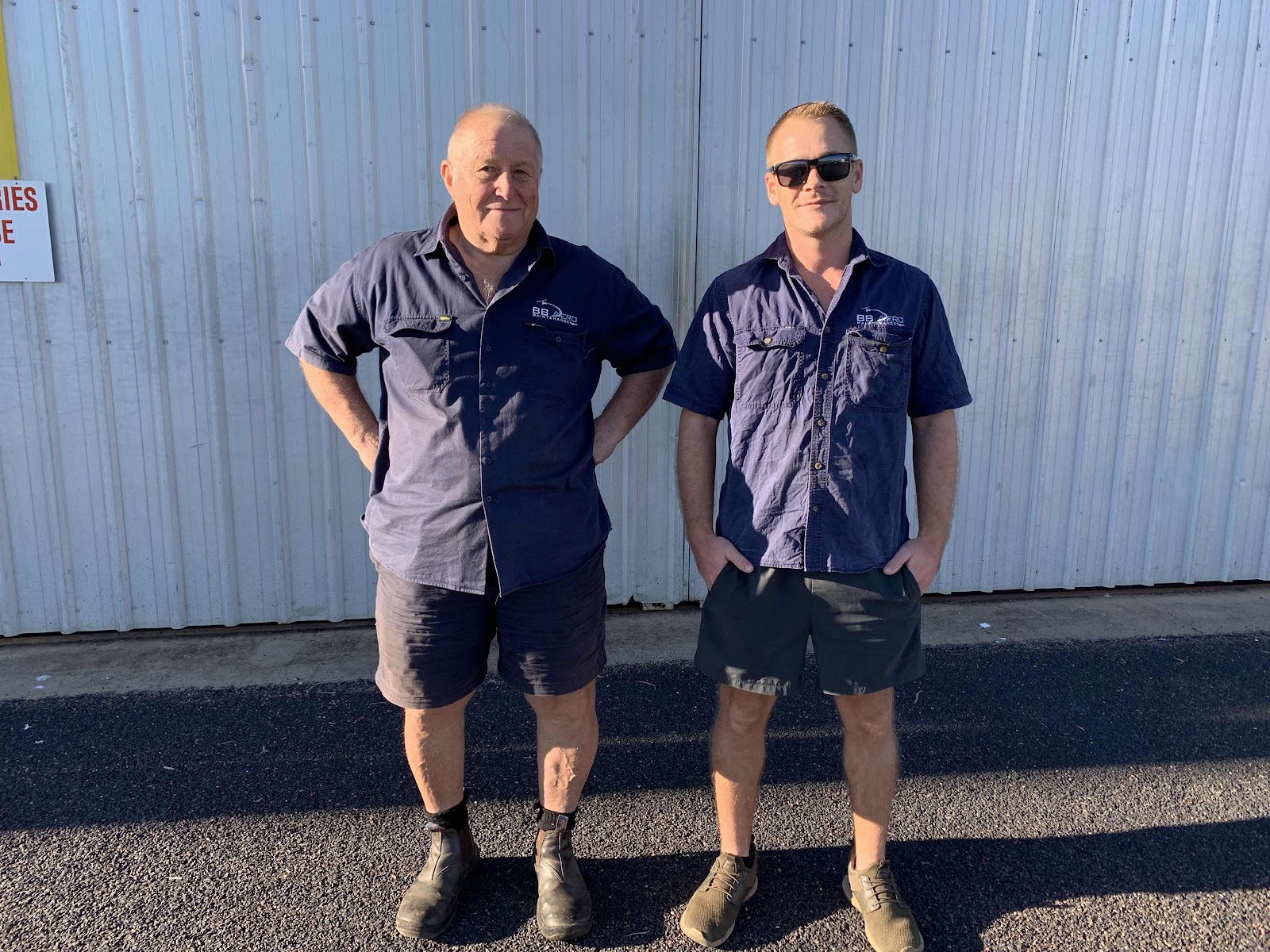
The ‘Towers’ certainly filled expectations for the Bazflyers who touched down at Charters Towers with purpose in mind. It was some where they had not previously visited. It was conveniently located midway between the Sunshine Coast and Horn Island, the exit port for their flight into Papua New Guinea. But....more importantly, there was a ‘golden’ opportunity to change BAZ’s engine oil and filter and give the Comanche a good look over. Bob and Ben the wonderful friendly father and son proprietors of B&B Aero Maintenance opened their hangar door and made Bazflyers very welcome. 


Ben is also an avid Paramotor flyer and the subject of a seperate Bazflyer2 video interview. A recent successful attempt on the long distance straight line world record for Paramotor flight took off from Charters Towers. With Ben’s enthusiasm Paramotor flying could well become the next ‘gold rush’ at Charters Towers....definitely!


Beautifully restored Stock Exchange building


Telling the B&B hangar dog about the just completed oil and filter change


Bob and Ben...aviation legend’s at Charters Towers


Sunday, May 5, 2019

Reunion

An eclectic collection of friends is one of life’s greatest gifts and the Bazflyers are deeply privileged to chart their life through such precious relationships. They have friends who have given wisdom. Friends who have provided help in a time of need. Friends who have unconditionally applied their strength.


The following phrase comes too easily to mind which probably means it’s not an original conception. “True friendship comes when the silence between two people is comfortable.” 


Few things are more comfortable, more enjoyable, than being among true friends. At times it can be like a party for introverts. Discussion is optional. There is not a single moment of awkwardness. Even the sounds of silence between friends is beautiful.


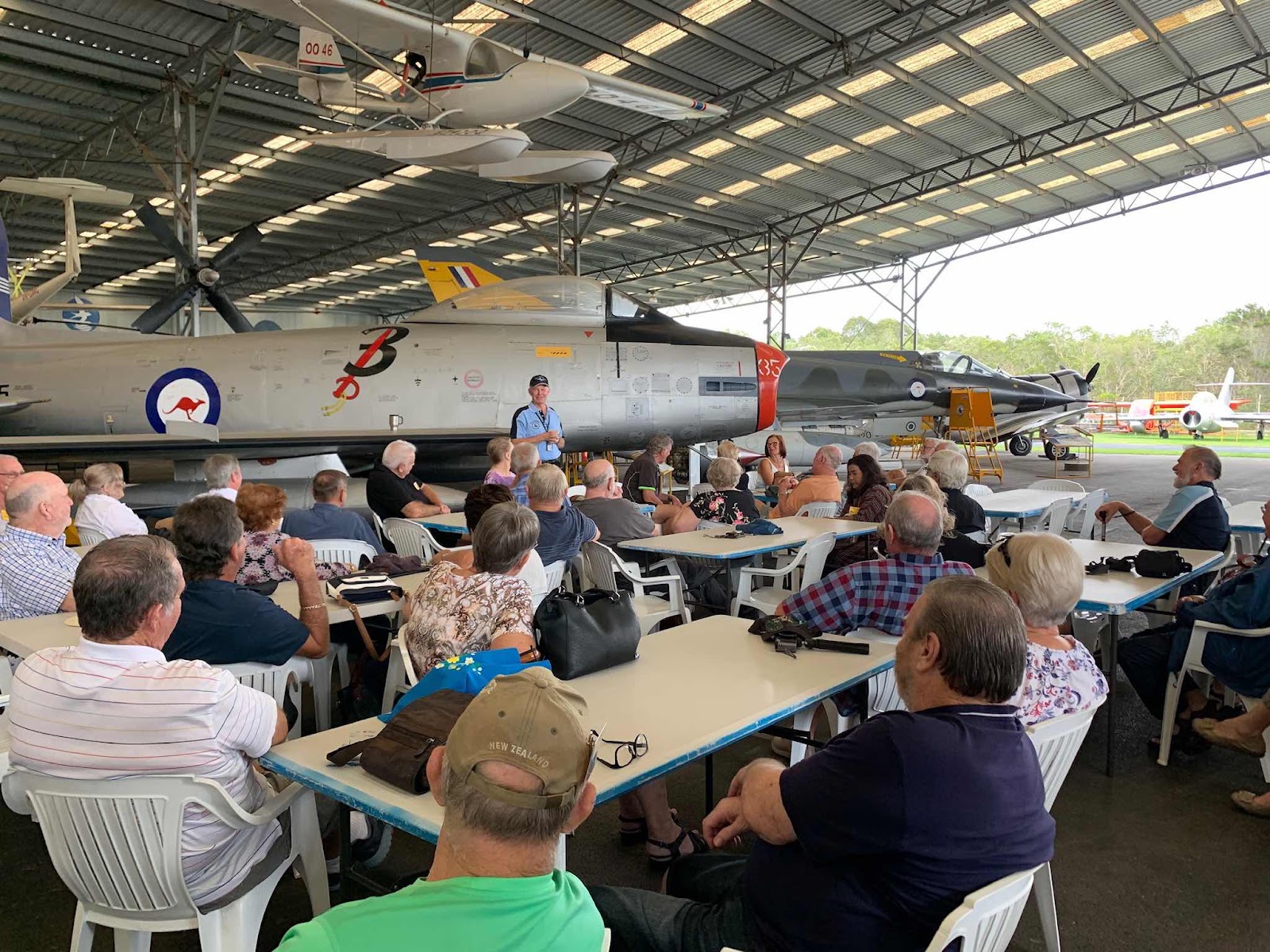
Therefore, how satisfying it was for Bazflyer1 to spent yesterday in the casual company of friendships forged fifty-five years ago. It was no coincidence that Round the World 2019 and the principal Australian stop-over was scheduled to coincide with a reunion. A reunion of guys, now all septuagenarians, who at the dawning of 1964 came together for the first time at the Royal Australian Air Force Base of Wagga Wagga. Young teenage boys from every corner of Australia, along with half-a-handful of New Zealanders, all destined to spend two and a half years together learning trade skills and communal military life. 


For the most part 55 years of one’s life slips by far to fast but fortunately friendships are seemingly immune to time. Have you ever noticed that when friends convene after a very long absence the interval of separation is bridged in a moment of time and the friendship of old instantly resumes....once again. 


Reminiscing among familiar jet aircraft that were once the frontline of Australian built military hardware. 


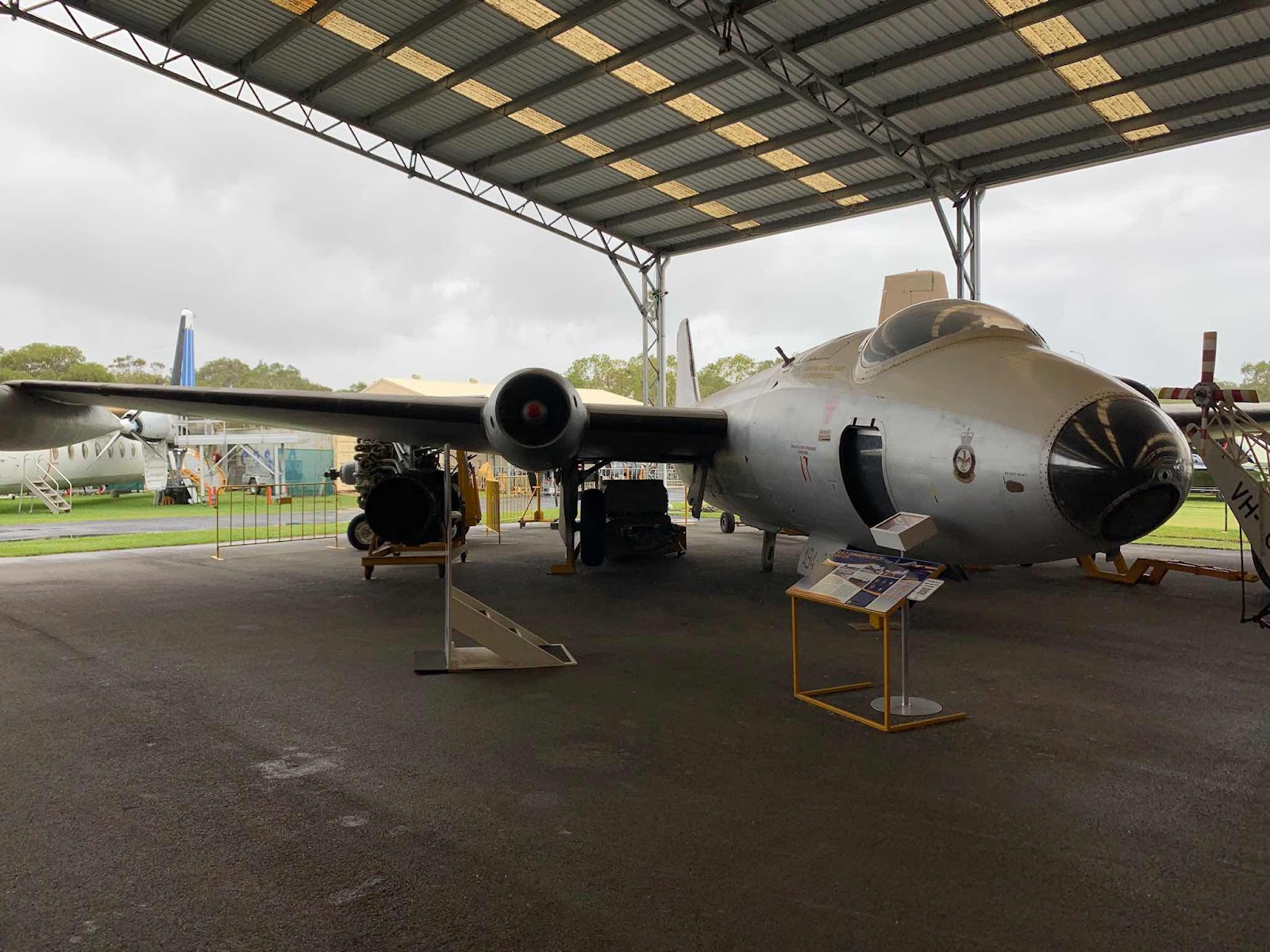
Built under license in Australian the Canberra MK-20 saw operational service with the RAAF in Malaya and Vietnam.


Looking back at the F-111


The emotions of one particular Bazflyer will forever be stirred by the characteristic sound of an advancing “Huey”....music indeed.


Thursday, May 2, 2019

G’day Mate

Aviation radio talk has its own standardised phraseology. It is based on a set of communication rules for simplified English language communication between an air traffic controller and the pilot of an aircraft. Brevity is a goal. Shorter communication segments mean the airwaves are available for other aircraft, an important factor with skies becoming an increasingly busy place.
Radio contacts using aeronautical phraseology begin with an aircraft identifier call sign in the case of a pilot, or the name of the airport or service in the case of air traffic control. For example Bazflyers would announce their presence to, say Brisbane Approach, with a radio transmission like; “Brisbane Approach...ZK-BAZ” Sometimes, in the spirit of cordiality the Bazflyer might inject an exclamation like “good morning...” However, you definitely know that you can only be in Australia when Air Traffic Control adds the uniquely Australian salutation of “g’day” in its radio response...! 
G’day is an Australian slang word being an abbreviation of the phrase “good day”. Another uniquely Australian term is “galah” which means “silly person”. Many guide books on Australian slang words and phrases have been published over the years....and also at Ozzie Slang. 
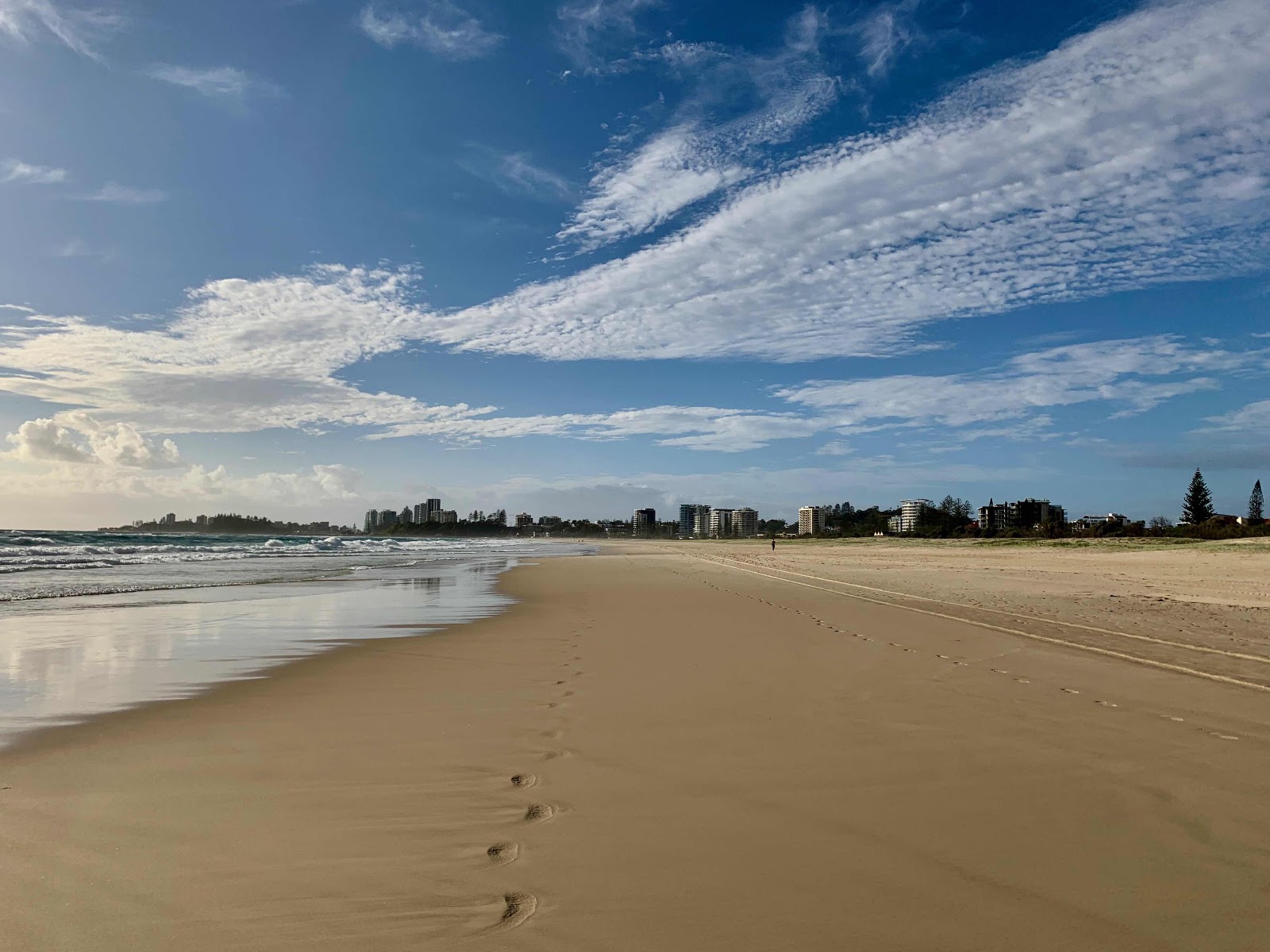
Kirra Beach, a typical Gold Coast beach


Power Salad meal at the Kirra Surf Club
Bribie Island sunset

Wednesday, May 1, 2019

Watching Weather

Flight, by its very meaning infers being above ‘terra firma’ and then somehow like a force of magic, being supported in the atmosphere. We know that possibly from the very first time creatures were observed in flight man has also dreamed of being up there with them.

Fortunately for us the eons of time have eroded many myths and nowadays, unlike those times of old, we know there is definitely no magic involved in flight….its all up to physics. Knowledge and advancements in the physics of aerodynamics has fostered aircraft development and enabled man to fly and enjoy the same environment as birds. 

Whilst continual development has delivered significant improvements in man’s ability to fly, the environment in which flight occurs remains the same as it has always been. The air surrounding our planet has not changed. Wind, rain, clouds and temperature all have an effect on flight in some way and not always with beneficial outcomes. Flyers refer to these factors as ‘weather’.  

Long-range flight, especially in a small airplane like ZK-BAZ, requires many hours in the air. The time and distance involved means the Bazflyers will invariably encounter different weather conditions along the way. Although man is unlikely to discover any meaningful way to influence weather, technology developments in forecasting future weather have been one of the biggest advancements beneficial to flight during the past 50 years, and continues to improve. 

With a particular long-range flight in mind, the Bazflyers will typically consult and monitor three or more different weather forecasting sites on the internet, looking ahead to choose an optimum time for the flight. Yesterday’s flight from Kerikeri (NZKK) in the far north of New Zealand over the Tasman Sea to Australia’s Gold Coast airport (YBCG) was a distance of 1,150 nautical miles (2,130 km). The Bazflyers were in the air for 7 hours and 15 minutes. The day chosen for the flight was not a random decision. It was based on a couple of weeks of observing forecast weather patterns for the flight and even then departure was delayed 24 hours to take better advantage of forecast tail wind conditions. When it comes to weather even the best of technology available today has not changed a saying born in the very early days of flight….”If you’ve got time to spare, go by air”. 

Flight path over the Tasman Sea from Kerikeri to the Gold Coast


Forecast weather pattern for Bazflyer’s flight. Our lovely tail-wind was due to the southern hemisphere anti-clockwise circulation around the high pressure area. However, such conditions also typically deposit warm moist air onto the Australian coast which meant an instrument approach (RNAV-Z 14) and cross-wind landing at the Gold Coast airport.  


Halfway across the Tasman Sea with cloud below and blue sky above.